
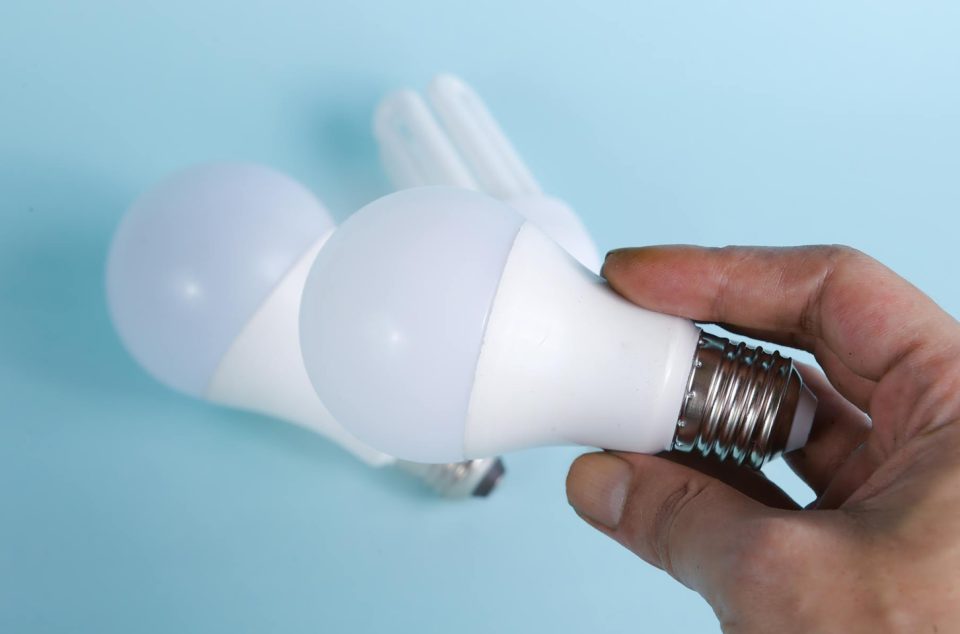
Switching to LED Lighting:
Energy, Savings, Longevity, and the Smart Home
Few changes a homeowner can make deliver as immediate and far-reaching a benefit as switching from traditional incandescent or halogen lighting to modern LED technology. Over the past decade, LED bulbs and fittings have transformed from expensive and occasionally unreliable curiosities into the clear, practical choice for any home – and the gap between them and older lighting technologies has only continued to widen. The latest generation of LED products combines exceptional energy efficiency with long operational lifespans, a broad range of light qualities and colours, and seamless compatibility with the smart home systems that are rapidly becoming a fixture of modern living.
This article examines in detail the full range of benefits that LED lighting offers the domestic user: the energy savings that will be felt immediately on electricity bills, the long-term cost advantages that come from bulbs lasting many thousands of hours longer than their predecessors, the environmental case for making the switch, the variety of products now available, and the exciting possibilities that open up when LED technology is combined with smart home controls, automation, and voice assistant platforms.
LED stands for Light Emitting Diode. Unlike incandescent bulbs, which produce light by heating a thin wire filament to the point where it glows, and unlike fluorescent lamps, which excite gas to produce ultraviolet radiation that in turn causes a phosphor coating to emit visible light, an LED produces light directly from the movement of electrons through a semiconductor material. This is a fundamentally more efficient process, as it generates far less wasted heat relative to the amount of light produced.
Early LED lighting, while efficient, sometimes struggled to replicate the warm, natural quality of incandescent light. Modern LEDs have overcome this comprehensively. Today’s LED bulbs are available across the full spectrum of colour temperatures – from a warm, golden 2700K that closely mimics the glow of a traditional incandescent, through neutral white options around 4000K that suit kitchens, offices and utility spaces, up to cool daylight options at 5000K and above that are sometimes preferred for task lighting or workshop environments. Colour Rendering Index (CRI) values, which indicate how accurately a light source renders colours compared to natural daylight, have also improved significantly, with many premium LED bulbs now achieving CRI values of 90 or above.
LED technology has also diversified well beyond the simple replacement of standard bayonet or screw-fit bulbs. The market now includes LED downlights, LED panel lights, LED strip lighting, LED filament bulbs that mimic the aesthetic of vintage Edison bulbs, outdoor LED floodlights, LED garden lighting, and integrated LED fittings where the light source is built into the fixture itself. In short, whatever the application, there is now an LED solution designed to meet it.
|
Key fact: An LED bulb converting electrical energy to light wastes only around 5% of its input as heat. A traditional incandescent bulb wastes approximately 90% of its energy input as heat, with only around 10% producing visible light. |
Energy Efficiency: The Numbers that Matter
The energy efficiency advantage of LED lighting over older technologies is substantial and well documented. Understanding the figures helps to appreciate just how significant the saving is in practice.
Watts, Lumens, and Efficacy
The brightness of a light source is measured in lumens, while the power it consumes is measured in watts. The relationship between the two – lumens per watt – is known as luminous efficacy, and it is the key metric for comparing the efficiency of different light sources.
A standard 60-watt incandescent bulb produces roughly 800 lumens, giving an efficacy of approximately 13 lumens per watt. A halogen equivalent might achieve 15 to 20 lumens per watt. A compact fluorescent lamp (CFL) does better, typically achieving 45 to 75 lumens per watt. A modern LED bulb producing the same 800 lumens of light will typically consume just 7 to 9 watts, delivering an efficacy of 90 to 115 lumens per watt – and premium LED products are pushing efficacy values well above this. In practical terms, this means that an LED bulb provides the same amount of usable light as a 60-watt incandescent using approximately one seventh of the electricity.
Whole-Home Impact
Consider a typical home with twenty light fittings. If all twenty are fitted with traditional 60-watt incandescent bulbs and are used for an average of four hours per day, the annual electricity consumption from lighting alone is:
- 20 bulbs × 60 watts = 1,200 watts (1.2 kW)
- 1.2 kW × 4 hours × 365 days = 1,752 kWh per year
Replace all twenty with 8-watt LED equivalents and the calculation changes dramatically:
- 20 bulbs × 8 watts = 160 watts (0.16 kW)
- 0.16 kW × 4 hours × 365 days = 233.6 kWh per year
That represents a reduction in lighting energy consumption of roughly 87%, or nearly 1,520 kWh saved annually. At current typical UK electricity prices, this represents a meaningful and ongoing reduction in household energy bills – and the saving is achieved simply by changing the bulbs, with no alteration to habits or usage patterns whatsoever.
Halogen Spotlights: A Particularly Strong Case
Homes with GU10 halogen spotlights – a very common fitting in UK kitchens, bathrooms, and living rooms – stand to gain especially significant savings from switching to LED. A typical halogen GU10 consumes 50 watts and delivers approximately 400 lumens. An LED GU10 replacement delivers the same or greater light output for just 5 to 7 watts. In kitchens with six, eight, or even twelve downlights, the cumulative saving from replacing halogens with LEDs is immediate and highly tangible, and the reduced heat output also makes a noticeable difference to room temperature in summer.
Cost Savings: Short Term and Long Term
The economic case for switching to LED is compelling from multiple angles. There are immediate savings on running costs, but the longevity of LED products also dramatically reduces the ongoing expenditure on replacement bulbs.
Running Cost Savings
As demonstrated above, the reduction in electricity consumption is typically in the region of 80 to 90% compared with incandescent equivalents, and 60 to 80% compared with halogen. These savings begin the moment the LED bulb is switched on for the first time. For households in which lighting represents a significant proportion of electricity use – particularly those with many downlights, or where lights are left on for long periods – the annual saving can be substantial.
It is worth noting that LED lighting is particularly well suited to environments where lights are left on for extended periods, such as hallways, living rooms, and kitchens, precisely because the energy saving per hour of use is constant. Unlike some older energy-saving technologies, there is no warm-up period, no degradation in brightness from frequent switching, and no penalty for turning lights on and off regularly.
Purchase Price: A Rapidly Closing Gap
In the early years of LED adoption, the higher purchase price of LED bulbs compared to incandescent or halogen alternatives was a significant barrier. That barrier has now largely disappeared. LED bulbs are widely available at competitive price points, and the range of budget options from both specialist lighting brands, such as Integral LED, and general home improvement retailers means that a quality LED replacement for a standard bulb can be purchased for a very modest sum. When the purchase price is set against the dramatic reduction in running costs and the far greater lifespan, the payback period for switching to LED is now typically measured in months rather than years.
Replacement Costs and Lifespan Savings
One of the most significant but sometimes overlooked financial advantages of LED lighting is the dramatic reduction in the need to replace bulbs. A traditional incandescent bulb might last for 1,000 hours. A halogen equivalent may extend this to 2,000 hours. A quality modern LED bulb, by contrast, is typically rated for 15,000 to 25,000 hours, with premium products sometimes rated for 30,000 hours or more.
To put this in perspective: if a bulb is used for four hours per day, an incandescent will last approximately 9 months, while a 25,000-hour LED will last around 17 years. Over that same 17-year period, you would need to purchase and fit approximately 25 incandescent replacements, or around 12 halogen replacements, for the same fitting. The cost of repeated replacements – both in terms of purchase price and the time and inconvenience involved – adds meaningfully to the true cost of older technologies, particularly in hard-to-reach fittings such as high ceilings or recessed downlights.
|
Summary of typical lifespan comparison: Incandescent: ~1,000 hours – Halogen: ~2,000 hours – CFL: ~8,000-10,000 hours – LED: 15,000-30,000+ hours. A quality LED bulb used 4 hours per day can last well over 15 years without replacement. |
Light Quality and Versatility
Early criticisms of LED lighting centred on light quality – concerns about cold, harsh tones, unnatural colour rendering, or flickering. Modern LED technology has addressed all of these issues comprehensively, and today’s LED products offer a quality and variety of light output that matches or exceeds any predecessor technology.
Colour Temperature
LED bulbs are available across the full range of colour temperatures used in domestic settings. Warm white LEDs at around 2700K produce the familiar soft, golden light associated with traditional incandescent bulbs, and are well suited to living rooms, bedrooms, and dining areas where a relaxed, welcoming atmosphere is desired. Neutral white options at 3000K to 4000K suit kitchens, bathrooms, and home offices where a crisper, cleaner light is more appropriate. Daylight-spectrum options at 5000K to 6500K are sometimes used in workshops, garages, or task-lighting applications where maximum visibility and colour accuracy are priorities.
Tunable white LED products take this further, allowing the colour temperature of the light to be adjusted dynamically – from warm to cool – either manually through a dimmer or app, or automatically through a smart home system. This enables the lighting throughout the home to be aligned with the time of day, supporting natural circadian rhythms by providing warmer, dimmer light in the evenings and brighter, cooler light during active daytime hours.
Dimming Capability
Most quality LED bulbs are now fully dimmable, provided they are paired with a compatible dimmer switch. This capability, combined with the efficiency of LED technology, means that dimming not only improves ambience but also further reduces energy consumption – a bulb dimmed to 50% brightness typically consumes around 20% less energy. Dimmable LEDs with smooth, flicker-free dimming performance across a wide range – from full brightness down to a very low level without cutting out or flickering – are now widely available at accessible price points.
Form Factors and Applications
The physical form of LED products has evolved to cover every domestic application. Standard bayonet (B22) and Edison screw (E27) caps cover the majority of lamp holders. GU10 and MR16 formats address the vast installed base of spotlights and downlights. Candle and golf ball formats suit decorative pendants, wall lights, and chandeliers. Filament-style LED bulbs – which replicate the visual appearance of vintage incandescent bulbs while consuming a fraction of the energy – have become popular in exposed-bulb pendant fittings and feature lighting. LED strip lights can be cut to length and installed under cabinets, along coving, behind screens, or within furniture to provide accent, task, or decorative illumination.
Environmental Benefits
The environmental case for LED lighting is straightforward. The reduction in electricity consumption directly translates to a reduction in the carbon emissions associated with electricity generation. According to the Energy Saving Trust, lighting accounts for around 11 to 15% of a typical household’s electricity bill. Switching entirely to LED can reduce this component of household energy use by up to 90%, making it one of the most impactful single steps a householder can take in reducing their carbon footprint.
Unlike compact fluorescent lamps (CFLs), which contain small amounts of mercury and require careful disposal as hazardous waste, LED bulbs contain no mercury and no other hazardous materials. They are generally regarded as easier to dispose of responsibly at end of life. Their extraordinary longevity also means significantly fewer units are manufactured, transported, and ultimately discarded over their working lives compared with incandescent or halogen equivalents – a further reduction in the environmental impact associated with production and waste.
LED technology is also well matched to the growing number of homes generating their own electricity through solar panels. The lower wattage of LED bulbs means that solar-generated electricity goes further, and the compatibility of LED products with smart home controls makes it possible to align lighting use with periods of maximum solar generation, further reducing dependence on grid electricity.
LED Lighting in the Smart Home
LED technology and smart home systems are natural partners. The controllability of LED lighting – its ability to be dimmed, colour-shifted, and switched precisely – aligns perfectly with the remote control, automation, and scene-setting capabilities of modern smart home platforms. The combination transforms lighting from a simple binary function (on or off) into one of the most expressive and useful tools in the connected home.
Smart LED Bulbs
Smart LED bulbs connect to the home’s Wi-Fi network (or to a dedicated hub using Zigbee or Bluetooth) and can be controlled remotely via a smartphone app, or through voice commands using Amazon Alexa, Google Home, or Apple HomeKit. They offer all the standard advantages of LED technology – low energy consumption, long lifespan, high quality light – with the added capability of being controlled, scheduled, and automated without any changes to the existing wiring or switching infrastructure.
Full-colour smart LED bulbs extend this further, enabling the entire visible spectrum to be reproduced within a standard lamp holder. The same bulb that provides warm white reading light in the evening can be changed to a cooler, more energising tone for a morning routine, shifted to a deep red for a home cinema setting, or set to a gentle blue-green for a relaxed background atmosphere. Brands such as Philips Hue and LIFX have built substantial ecosystems around this capability, while brands such as Ener-J Smart Home offer Wi-Fi connected smart bulbs with colour-changing and tunable white features that are compatible with Alexa and Google Home without requiring a hub.
Smart LED Downlights and Panels
Where recessed or surface-mounted ceiling lighting is used, smart LED downlights and panel lights bring the same connectivity and controllability to fixed fittings. These are increasingly popular in kitchens, living rooms, home offices, and bathrooms, and many are available as tunable white or full-colour options. Smart downlights designed for the UK market are generally straightforward to install in place of existing halogen fittings, and once connected bring the full range of smart control capabilities to areas of the home that might previously have been limited to a simple on/off switch.
Smart LED Strip Lighting
Smart LED strip lights are among the most versatile products in the connected home lighting toolkit. Their flexibility means they can be installed in locations where a conventional light fitting would be impractical – along the underside of kitchen wall units, behind a television or monitor to provide bias lighting that reduces eye strain, around mirror frames, under beds or sofas for subtle floor-level illumination, or along staircases and skirting boards for safety lighting and decorative effect.
Wi-Fi enabled LED strips can be controlled for both colour and brightness from a smartphone app and integrated into scenes and routines alongside other smart home devices. An evening routine might dim the main ceiling lights, activate warm-toned strip lighting behind the sofa, and set a gentle colour wash in the hallway – all from a single tap or voice command.
Smart Switches, Dimmers, and Scene Control
Smart LED lighting does not necessarily require smart bulbs. Smart switches and dimmers – which replace or supplement the standard wall switch – can bring remote control and automation capabilities to any LED fitting, regardless of whether the bulbs themselves are ‘smart’. This approach is particularly useful where a consistent aesthetic across switch plates is important, or where LED fittings with integrated non-replaceable light sources are used.
Touch-sensitive smart switches with Wi-Fi connectivity can control LED circuits from the wall, from a phone app, or by voice, and often support multi-gang configurations that allow several lighting circuits to be managed from a single elegant panel. Wireless kinetic switches – which generate their own power from the physical action of pressing the switch and require no mains wiring – can be paired with smart receiver modules to bring full app and voice control to LED lighting circuits with minimal installation complexity.
Scenes, Schedules, and Automation
The full potential of smart LED lighting emerges when it is integrated into wider home automation. Scenes – preset combinations of brightness levels, colour temperatures, and activated zones – allow an entire room’s lighting mood to be changed in an instant. A ‘Concentrate’ scene for a home office might set cool white LED panels to full brightness. A ‘Relax’ scene for the living room might dim the main lights to 30% warm white and activate amber strip lighting behind the television. A ‘Sleep’ scene might gradually reduce all bedroom lighting to a very dim, warm red over the course of half an hour.
Schedules allow LED lighting to operate automatically at preset times, ensuring lights come on at dusk and switch off at a set time in the evening without requiring any manual intervention – and without lighting being left on unnecessarily through oversight. Automation rules can link LED lighting to other smart home events: motion sensors that trigger hallway or staircase lights when movement is detected, door sensors that switch on an entrance light when the front door opens, or geofencing rules that activate a welcome scene as the homeowner’s smartphone approaches the home.
Circadian Rhythm and Wellbeing Lighting
One of the more sophisticated applications of smart LED technology in the home is the use of dynamic colour temperature adjustment to support natural circadian rhythms. Exposure to blue-enriched cool white light during the day promotes alertness and concentration; exposure to warm, low-intensity light in the evenings supports the natural onset of tiredness and preparation for sleep. Tunable white smart LED systems can replicate this natural progression automatically, brightening to a cool white in the morning, shifting to neutral daylight tones during working hours, and transitioning gradually to warm, dim tones as the evening progresses.
Some smart lighting platforms include pre-built circadian rhythm features that handle this transition automatically. Others allow users to create their own schedules and scenes that achieve the same effect. Either way, the result is a more natural and biologically supportive lighting environment, achieved effortlessly through the combination of LED technology and smart home controls.
Energy Monitoring and Smart Efficiency
When smart LED bulbs and fittings are combined with smart plugs or smart switches that include energy monitoring features, homeowners gain detailed visibility over their lighting energy consumption. Knowing which circuits or fittings are consuming the most energy allows informed decisions about usage patterns, and automation rules can be set to turn off lights that have been left on in unoccupied rooms. The combination of the already low energy consumption of LED technology with smart automation that ensures lights are never left on unnecessarily represents the most efficient possible use of domestic lighting.
Making the Switch: Practical Considerations
Switching to LED lighting in an existing home is generally straightforward, but there are a few practical points worth bearing in mind to ensure the best results.
Compatibility with Existing Dimmers
Not all dimmer switches are compatible with LED bulbs, particularly older leading-edge dimmers designed for use with incandescent or halogen loads. Using an incompatible dimmer with an LED bulb can result in flickering, buzzing, or reduced dimming range. Most LED bulb manufacturers publish lists of compatible dimmers, and it is worth checking these before installation. In many cases, replacing an older dimmer with a modern LED-compatible trailing-edge or universal dimmer – a relatively inexpensive change – resolves any compatibility issues and also allows smart dimmer switches to be installed at the same time if desired.
Transformer Compatibility for MR16 Bulbs
MR16 low-voltage spotlight bulbs (commonly used in older kitchen and bathroom downlights) are typically powered via a transformer, which steps the mains voltage down to 12V. LED MR16 bulbs require a compatible electronic transformer rather than older magnetic transformers, and the minimum load requirement of some transformers may not be met by low-wattage LED bulbs. If MR16 fittings are in use, checking transformer compatibility before purchasing LED replacements is advisable. Many homeowners in this situation choose to replace the fittings entirely with GU10 downlights, which run at mains voltage and are straightforwardly compatible with LED bulbs.
Choosing the Right Colour Temperature
Selecting the appropriate colour temperature for each room makes a significant difference to the ambience and functionality of the space. As a general guide, warm white (2700K-3000K) suits bedrooms, living rooms, and dining areas; neutral white (3500K-4000K) works well in kitchens, bathrooms, and home offices; cool white or daylight (5000K+) is best suited to utility spaces, workshops, and task lighting applications. Tunable white smart LED products sidestep this decision entirely, allowing the colour temperature to be adjusted to suit the time of day or the activity.
Phased Transition
It is not necessary to replace all lighting in a home at once. Many homeowners begin with the rooms or circuits where lights are used most frequently – typically kitchens, living rooms, and hallways – as these are the areas where the energy saving will be felt most quickly. Smart bulbs and smart switches can be introduced selectively, with rooms added to the smart home system as and when convenient. The flexibility and scalability of modern smart lighting platforms means there is no penalty for taking a phased approach.
Conclusion
The case for switching to LED lighting in the home has never been stronger. The energy efficiency advantages are substantial and immediate, with typical savings of 80 to 90% over incandescent equivalents translating directly into lower electricity bills from day one. The longevity of modern LED products – rated lifespans of 15,000 to 25,000 hours and beyond – means that the inconvenience and cost of frequent bulb replacement becomes a thing of the past. The quality of light available from today’s LEDs matches and in many cases surpasses that of the technologies they replace, with a full range of colour temperatures, excellent colour rendering, and smooth dimming performance widely available at accessible price points.
Beyond these already compelling fundamentals, the integration of LED technology with smart home systems opens up a world of possibility: remote control from anywhere, automated schedules and routines that eliminate wasted energy, scenes that transform the mood of a room in an instant, dynamic colour temperature adjustment to support health and wellbeing, and seamless compatibility with Amazon Alexa, Google Home, and Apple HomeKit. Whether approached as a simple energy-saving measure or as the foundation of a fully connected home lighting system, the switch to LED is one of the most straightforward, effective, and rewarding upgrades any homeowner can make.
