
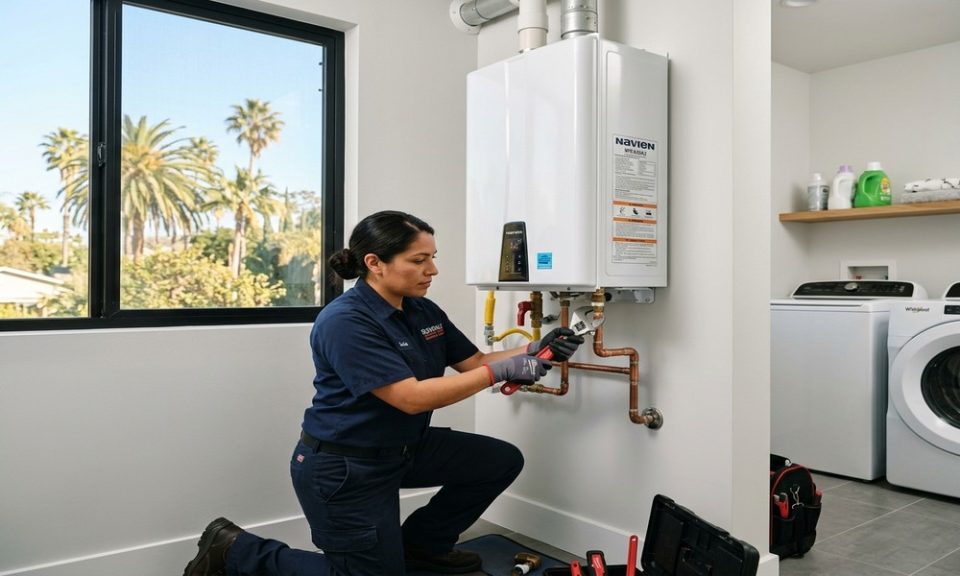
Why Glendale Homeowners are Switching to Tankless Systems
For many homeowners in Glendale, CA, the daily routine often includes a common frustration: an unreliable water heater. Whether it’s running out of hot water during a shower, noticing higher utility bills, or dealing with an aging, inefficient tank, these issues can significantly impact home comfort. If you’re considering a change, understanding the benefits of a tankless water heater replacement is key. This extensive guide will help you navigate the options and find the best tankless water replacement service in Glendale, CA, ensuring your home enjoys consistent, energy-efficient hot water for years to come. We will explore everything from cost factors to local codes, helping you make an informed decision.
To understand the full scope of modern water heating solutions, explore our comprehensive resources, and for expert assistance with your water heating needs, reach out to us.
The shift towards tankless water heaters in Glendale, CA, reflects a growing demand for efficiency, convenience, and long-term value. Homeowners are increasingly recognizing the distinct advantages these modern systems offer over traditional tank-style units.
One of the most compelling benefits is the promise of endless hot water. Unlike conventional tanks that store a finite amount of heated water, tankless systems heat water on demand. This means you can run multiple showers, a dishwasher, and a washing machine simultaneously without ever worrying about the hot water supply running out. For busy households, this continuous flow is a game-changer, eliminating the “hot water race” where the first person in the shower gets a luxurious experience, and subsequent users are left with a lukewarm rinse.
Beyond the immediate comfort, tankless units offer significant space-saving advantages. Traditional water heaters are bulky appliances that occupy valuable floor space in utility closets, garages, or basements. Tankless models, being compact and wall-mounted, free up this space, allowing for more storage or other functional uses within the home. This is particularly beneficial in Glendale’s diverse housing stock, where older homes might have limited utility areas.
From a financial perspective, investing in a tankless system can increase property value. As of April 2026, homeowners and prospective buyers are increasingly conscious of energy efficiency and modern amenities. A high-efficiency tankless water heater is a desirable feature that signals a well-maintained and updated home, appealing to eco-conscious buyers and potentially yielding a higher resale value.
Speaking of eco-consciousness, tankless water heaters are inherently eco-friendly technology. By heating water only when needed, they eliminate standby energy loss-the energy wasted by traditional tanks constantly reheating water, even when no one is using it. This reduction in energy consumption translates directly into a smaller carbon footprint, aligning with broader environmental goals and potentially qualifying for local utility rebates or federal tax credits for high-efficiency appliances.
For Glendale residents seeking the ultimate in home comfort, efficiency, and modern convenience, embracing tankless technology is a smart upgrade. When considering an upgrade, it’s crucial to seek out the Best Glendale tankless installation services to ensure your new system is perfectly matched to your home’s needs and installed to the highest standards.
Key Considerations for Water Heater Installation in Glendale
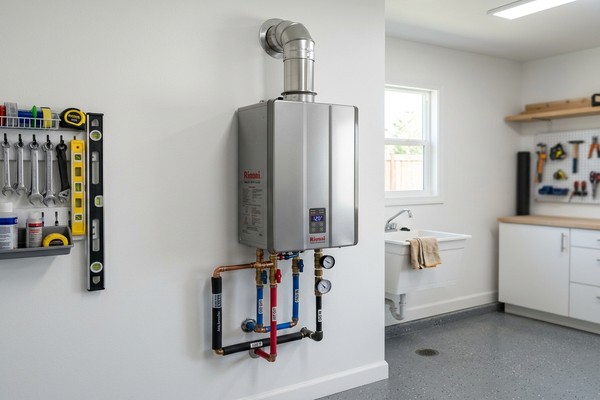
Transitioning to a tankless water heater in Glendale involves several important considerations to ensure optimal performance and longevity. These factors are crucial for a successful installation that meets your household’s demands and local regulations.
One significant challenge in Glendale is hard water. The water supply in our region contains high levels of dissolved minerals like calcium and magnesium. Over time, these minerals can lead to scale buildup within the heat exchanger of a tankless unit. This scale acts as an insulator, reducing efficiency, increasing energy consumption, and potentially causing premature failure. Proper installation should include an assessment of water hardness and recommendations for water conditioning or filtration systems to mitigate this issue.
Another critical aspect is determining the appropriate GPM (gallons per minute) flow rate. Unlike traditional tank heaters sized by gallon capacity, tankless units are sized based on how much hot water they can deliver per minute. This requires a thorough assessment of your household’s peak hot water demand, considering the number of bathrooms, occupants, and hot-water-using appliances (e.g., simultaneous showers, dishwashers, washing machines). Incorrect sizing can lead to insufficient hot water during peak usage times.
The gas line capacity is also a major consideration for gas-powered tankless units. Traditional tank heaters use a relatively small burner, typically around 34,000 to 40,000 BTUs. Tankless units, designed to heat water instantly, require a much larger burner, often ranging from 150,000 to 199,000 BTUs. This significant increase in BTU demand often necessitates an upgrade to your existing gas line or gas meter to ensure it can safely supply enough fuel to the new unit. A professional assessment will determine if such an upgrade is required.
Finally, venting requirements are paramount for safety and efficiency. Gas tankless water heaters produce exhaust gases that must be safely vented outdoors. This typically requires dedicated stainless steel or specialized PVC piping, which differs from the venting used for traditional tank heaters. Proper venting ensures no hazardous gases accumulate within your home and that the unit operates efficiently.
To illustrate the fundamental differences, consider this comparison between tankless and traditional storage tank water heaters:
Feature Traditional Storage Tank Water Heater Tankless Water Heater Lifespan 8-12 years 20-25 years with proper maintenance Efficiency Lower (standby heat loss) High (on-demand heating, up to 0.98 UEF for condensing models) Hot Water Supply Limited (tank capacity) Endless (continuous on-demand) Space Bulky, floor-mounted Compact, wall-mounted, saves space Flood Risk High (40-80 gallons stored) Low (minimal water stored) Energy Savings Minimal Significant (8-34% reduction in energy bills) Gas Line Needs Standard (34,000-40,000 BTUs) Often upgraded (150,000-199,000 BTUs) Maintenance Drain sediment annually Annual flushing/descaling, filter cleaning Navigating Local Building Codes for Water Heater Installation
Installing a new water heater in Glendale, CA, particularly a tankless unit, requires strict adherence to local building codes and safety standards. These regulations are in place to protect homeowners and ensure the safe and efficient operation of your plumbing systems.
One crucial requirement in Glendale, as in many parts of Southern California, is earthquake strapping. For any wall-mounted appliance, including tankless water heaters, proper strapping and bracing are essential to prevent damage or injury during seismic activity. This is not merely a recommendation but a mandatory safety measure that licensed installers are well-versed in.
Another significant code requirement, especially relevant for modern plumbing systems, involves thermal expansion tanks. If your home has a closed-loop plumbing system (meaning water cannot flow back into the municipal supply), a thermal expansion tank is required. This device absorbs the increased water pressure that occurs when water heats up, preventing pressure-related failures, protecting your water heater, and extending the life of your plumbing fixtures. A professional assessment will confirm if your system is closed-loop and if an expansion tank is necessary.
Ensuring permit compliance is a non-negotiable step. Any significant plumbing alteration, such as replacing a water heater, typically requires a permit from the City of Glendale. Obtaining the necessary permits ensures that the installation is inspected by city officials and meets all local safety and construction standards. Reputable service providers will handle the permit process on your behalf, guaranteeing a legal and safe installation.
Beyond these specific items, general safety standards govern all aspects of water heater installation, including proper gas line connections, electrical wiring (for electric models), and correct exhaust venting. Working with licensed, insured, and background-checked technicians ensures that all work is performed to code, protecting your investment and your family’s safety.
Signs You Need a Tankless Water Heater Installation
Recognizing the signs that your current water heater is failing or becoming inefficient is the first step toward considering a tankless replacement. Proactive replacement can save you from unexpected breakdowns, costly emergency repairs, and potential water damage.
Here are common indicators that it might be time for a new water heater:
- Inconsistent Temperatures: If your showers frequently fluctuate between hot and cold, or if the hot water supply is unreliable, it suggests your heating elements or heat exchanger are struggling.
- Metallic Noises: Strange sounds like banging, rumbling, or popping coming from your water heater often indicate sediment buildup inside the tank. This sediment reduces efficiency and can damage the unit over time.
- System Age: Traditional tank water heaters typically last between 8 and 12 years. If your unit is older than 10-15 years, it’s nearing the end of its lifespan, and replacement is often more cost-effective than continued repairs. The industry has seen significant advancements since 1968, and modern units offer far greater efficiency and reliability.
- Frequent Error Codes: For newer tank-style units or existing tankless systems, recurring error codes or shutdowns signal underlying problems that may be expensive to fix.
- Rising Energy Bills: An inefficient water heater has to work harder to heat water, leading to noticeable spikes in your utility bills. If you’re seeing unexplained increases in your energy consumption, your water heater could be the culprit.
- Rusty Water: If the hot water from your taps appears discolored or rusty, it’s a strong indication that the inside of your tank is corroding. This means the tank’s integrity is compromised, and a leak could be imminent.
- Visible Leaks: Any water pooling around the base of your water heater is a critical sign of failure. While some leaks might be repairable, a leaking tank often means it needs to be replaced immediately to prevent significant water damage to your home.
If you observe any of these signs, it’s wise to consult with a professional to assess your system and discuss the best course of action, which often points towards the long-term benefits of a tankless water heater replacement.
Maximizing Longevity Through Professional Maintenance
To ensure your tankless water heater operates at peak efficiency and achieves its impressive 20-25 year lifespan, professional maintenance is absolutely critical, especially in Glendale’s hard water environment. Neglecting maintenance can lead to reduced performance, higher energy bills, and even premature unit failure.
The cornerstone of tankless water heater maintenance in Glendale is annual flushing and descaling. As mentioned, hard water minerals accumulate in the heat exchanger, forming scale. This scale acts as an insulating layer, forcing the unit to work harder to heat water, increasing energy consumption and stressing components. A professional flushing service involves circulating a descaling solution through the heat exchanger to dissolve these mineral deposits, restoring the unit’s efficiency and preventing damage. Skipping this vital step is the fastest way to void your warranty and significantly shorten your unit’s life.
Beyond descaling, routine maintenance includes checking the overall heat exchanger health, inspecting all connections for leaks, and ensuring proper gas pressure and ignition. Technicians will also clean the air intake filters, which can become clogged with dust and debris, restricting airflow and impacting combustion efficiency.
A comprehensive system diagnostics check will identify any potential issues before they escalate into major repairs. This proactive approach ensures that your tankless system continues to provide endless hot water reliably and efficiently year after year.
Choosing a service provider with extensive experience is key to proper maintenance. Companies that have serviced over 1.2 million water heaters since 1968, and boast an average rating of 4.8 stars from over 5,850 online reviews, demonstrate a deep understanding of water heating systems and a commitment to customer satisfaction. Their expertise ensures your tankless unit receives the precise care it needs to thrive in Glendale’s unique conditions.
Frequently Asked Questions about Glendale Water Systems
As Glendale homeowners consider upgrading to tankless water heaters, several common questions arise regarding their performance, requirements, and benefits in our local context.
How long does a tankless unit last in Glendale?
With proper care, a tankless water heater can last significantly longer than a traditional tank-style unit. While a conventional tank typically has a lifespan of 8 to 12 years, a well-maintained tankless water heater can easily provide reliable hot water for 20 to 25 years. This extended durability is largely due to the absence of a storage tank, which means no internal corrosion from standing water – the primary cause of failure for traditional units.
However, in Glendale, the presence of hard water can impact this longevity if not addressed. The mineral buildup from hard water can reduce the unit’s efficiency and lifespan. This is why annual maintenance, specifically descaling and flushing, is crucial. By adhering to a regular maintenance schedule, Glendale residents can ensure their tankless units withstand the local water conditions and achieve their maximum durability, making them a smart long-term investment for Southern California homes.
Is a thermal expansion tank required for installation?
Yes, in many cases, a thermal expansion tank is required for tankless water heater installations in Glendale. This requirement typically applies to homes with closed-loop plumbing systems, where a backflow prevention device or pressure-reducing valve prevents water from flowing back into the municipal water supply.
When water is heated, it expands. In a closed-loop system, this expansion can lead to excessive pressure buildup within your home’s plumbing. A thermal expansion tank is designed to absorb this increased pressure, preventing damage to your water heater, pipes, and fixtures. It’s a critical safety feature that ensures the integrity of your plumbing system. A professional assessment by a qualified technician will determine if your home has a closed-loop system and if a thermal expansion tank is necessary to comply with Glendale requirements and ensure safe operation.
How does a tankless system improve energy efficiency?
Tankless water heaters significantly improve energy efficiency primarily by eliminating standby loss. Traditional tank heaters continuously heat and reheat a large volume of water, even when no one is using it, leading to wasted energy. Tankless systems, on the other hand, heat water only when there is a demand for it. When you turn on a hot water tap, the unit senses the flow, activates its heating elements, and delivers hot water on-demand.
This on-demand heating approach results in substantial energy savings. Homeowners often report a 25 to 35 percent reduction in annual energy use for water heating, with some seeing savings as high as 8% to 34% on their overall energy bills. Modern high-efficiency condensing tankless models can achieve a Uniform Energy Factor (UEF) rating of up to 0.98, meaning they convert almost all the energy they consume into hot water.
These efficiencies translate directly into monthly savings on utility bills, making a tankless water heater a financially sound investment over its long lifespan. As of April 2026, with increasing focus on sustainable living and energy conservation, tankless technology stands out as a leading solution for efficient hot water in Glendale homes.
Conclusion
Choosing the right water heater replacement is a significant decision for any Glendale homeowner, impacting daily comfort, energy consumption, and long-term expenses. As we’ve explored, tankless water heaters offer a compelling array of benefits, from endless hot water and considerable energy savings to space efficiency and a significantly longer lifespan compared to traditional tank units.
Navigating the specifics of Glendale’s hard water conditions, local building codes, and the technical requirements for installation-such as gas line capacity and GPM sizing-underscores the importance of relying on local expertise. A professional service provider understands these nuances, ensuring your installation is not only compliant and safe but also optimized for your home’s unique needs.
Investing in a tankless water heater is more than just a home upgrade; it’s a long-term investment in your comfort, your property’s value, and the environment. By choosing a reputable company with a proven track record of dependable service, you’re ensuring that your transition to a tankless system is seamless and that your new unit will provide years of reliable, energy-efficient hot water. Embrace the future of home comfort and make an informed decision for your Southern California home.
