
Key Takeaways
- Smart home systems are often planned during the early stages of interior renovation rather than added later.
- Lighting, security, climate control, and entertainment systems are commonly integrated into luxury residential projects.
- Concealed wiring and customised carpentry help maintain a clean interior appearance.
- Larger homes require more coordinated automation planning across multiple rooms and floors.
- Smart technology is typically adapted according to household routines and lifestyle needs.
Introduction
Smart home technology has become increasingly common in modern residential projects, especially in larger homes where convenience and operational efficiency are priorities. Features such as automated lighting, smart climate control, integrated entertainment systems, and digital security are now frequently included during renovation planning rather than installed separately after completion. This shift has influenced how designers approach luxury interior design in Singapore, particularly in homes where technology must work alongside customised finishes and large spatial layouts.
Meanwhile, in projects involving landed house interior design, smart systems are usually integrated during the early construction and design stages. This approach allows interior designers, electricians, and automation specialists to coordinate concealed wiring, equipment placement, and control systems before ceilings, walls, and carpentry are finalised. Proper planning reduces visible clutter while allowing technology to blend more naturally into the home environment.
Automated Lighting and Climate Systems
Lighting automation is one of the most commonly requested smart home features in luxury residential projects. Instead of relying solely on standard switches, homeowners can control brightness, timing, and lighting scenes through mobile applications or centralised control panels. Different lighting settings may be programmed for dining areas, entertainment spaces, bedrooms, or workspaces.
Interior designers often coordinate lighting automation with ceiling layouts and feature walls to minimise visual disruption. Switch panels, in some projects, are reduced or grouped together to maintain cleaner wall finishes. This approach is commonly seen in luxury interior design, where material selection and spatial consistency are prioritised alongside functionality.
Climate control systems are also integrated into smart home planning. Air-conditioning units can be linked to occupancy sensors, timers, and remote-access applications. That said, in larger landed properties, this allows homeowners to control cooling in specific zones rather than operating the entire house simultaneously. This approach is particularly useful in multi-storey homes with varying room usage throughout the day.
Concealed Technology Within Interior Spaces
A major consideration in smart home integration is concealment. Many homeowners prefer technology to remain functional without dominating the visual appearance of the interior. Due to this, designers often incorporate hidden speakers, concealed cable management systems, recessed control panels, and motorised curtain tracks into the overall design plan.
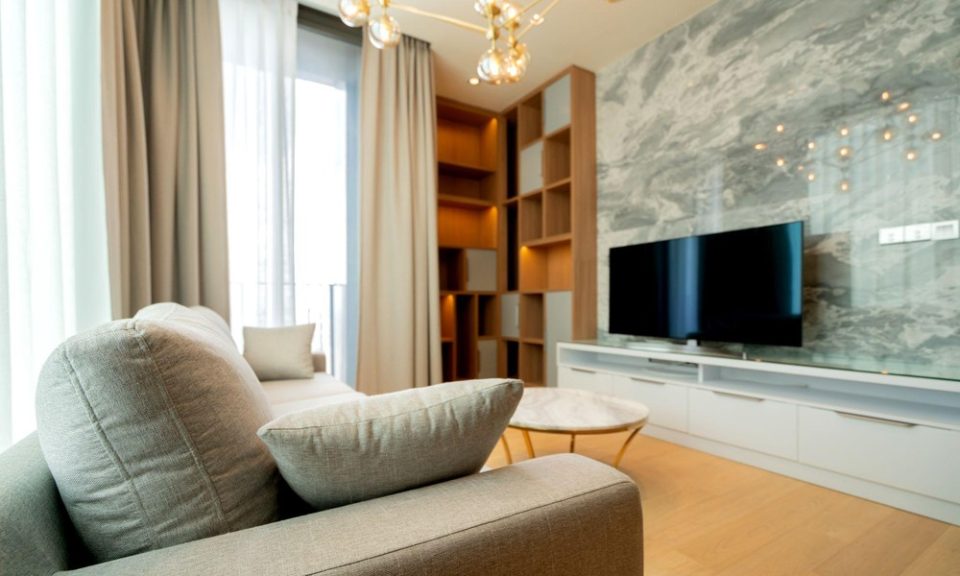
Custom carpentry frequently supports this process. Television screens may be integrated into feature walls, while audio systems can be positioned behind acoustic panels or ceiling finishes. Server equipment and network systems are sometimes placed inside utility rooms or storage cabinets to reduce noise and maintain a cleaner appearance in living spaces.
This level of coordination is especially important in landed house interior design in Singapore, where homes may contain multiple entertainment rooms, private lounges, home offices, and outdoor areas requiring separate automation controls.
Security and Lifestyle-Based Planning
Security integration is another major part of smart home design. Digital locks, surveillance systems, intercoms, and motion sensors are commonly connected to a single application platform. Homeowners can monitor entrances, gates, and interior spaces remotely through smartphones or tablets.
Designers also plan smart systems according to household routines and lifestyle preferences. Some homeowners prioritise entertainment systems and private cinema rooms, while others focus more on energy management or elderly-friendly automation features. Due to this, smart home planning often begins with discussions about daily routines and long-term usage requirements.
Furthermore, in many luxury residential projects, additional wiring pathways and accessible maintenance areas are included during renovation works. This approach allows future upgrades to be completed more easily without requiring major reconstruction.
Conclusion
Smart home systems are now closely integrated into modern residential interiors, particularly in larger properties where convenience and functionality are important considerations. Remember, in both luxury interior design and landed house interior design in Singapore, automation planning often begins early to ensure technology works smoothly with the home’s layout, finishes, and operational needs. Successful integration depends on coordination between interior designers, contractors, and technology specialists so that smart features support the overall living environment without disrupting the visual design of the space.
Contact Jialux Interior and let us plan your smart-enabled luxury home today.
