
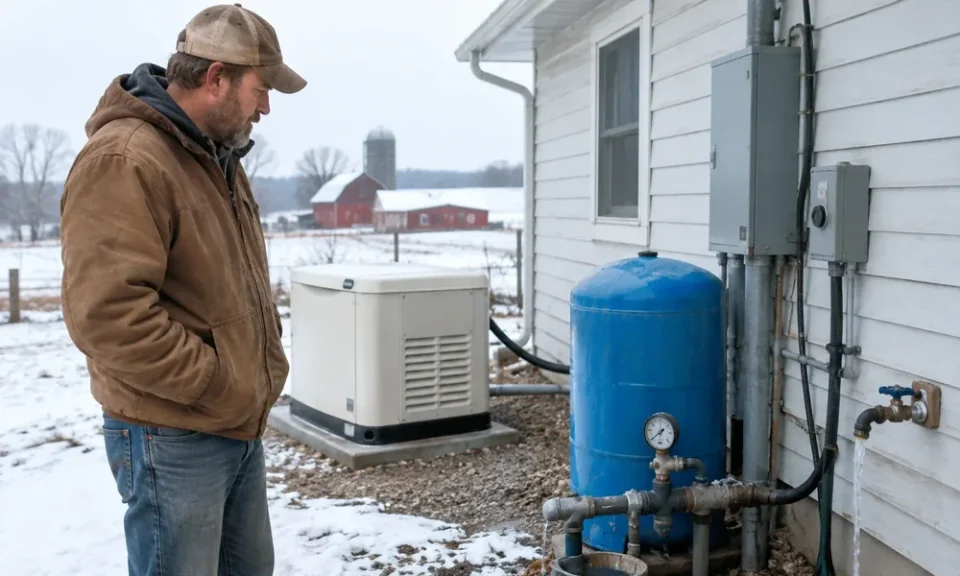
On the Cumberland Plateau, freezing rain coats the pines, limbs snap onto the lines along rural roads, and power can stay off for days in parts of Morgan, Scott and Roane counties. Meanwhile, more homes in the region now heat with electric heat pumps. That is efficient on a normal January day. During an outage, it means the house has no heat at all.
The fix most families reach for is a generator. Yet pairing one with a heat pump is less about buying the biggest unit on the lot and more about matching two machines that were never designed with each other in mind. Regional contractors such as MBM Heating and Air now handle both heating systems and standby generators, which shows how often rural homeowners treat the two as a single project rather than separate purchases.
Here is where the real loads hide, and why fuel and placement matter as much as size.
Starting Current Is the Number That Surprises People
A heat pump compressor does not ease into its work. For a split second at startup it pulls what technicians call locked rotor amps, often several times its normal running draw. A generator that handles the running load comfortably can still stall, bog down or trip its breaker during that surge.
Older single speed compressors are the hardest to start. Variable speed, or inverter driven, heat pumps ramp up gradually, which makes them far kinder to backup power. For older systems, a soft start kit added at the outdoor unit can trim that initial spike considerably.
Then there is auxiliary heat. Most heat pumps in East Tennessee carry electric resistance strips in the air handler for cold snaps and defrost cycles. Those strips can demand 10 kilowatts or more on their own. Many homeowners choose to lock them out while running on generator power and simply accept a slower warm up.
Tallying What the House Actually Needs
Sizing starts with an honest inventory of what must run during an outage. A practical tally usually covers:
- The heat pump’s running load and its starting surge, both readable from the outdoor unit’s nameplate.
- The indoor air handler blower.
- The well pump, which many rural properties depend on for every drop of water.
- An electric water heater, whose elements can draw around 4,500 watts each.
- The refrigerator, a few lighting circuits and any medical equipment.
Add the running loads, then make sure the largest starting surge fits on top of everything else already running. Load management modules help here. They briefly shed a big appliance, such as the water heater, while the compressor starts, then bring it back once the surge passes. That can let a home run on a smaller generator than raw math suggests.
Gas and Propane Furnaces Have an Easier Time
Homes heated by a propane or natural gas furnace face a much lighter electrical load. The blower motor, igniter and control board together draw a modest amount of power, so even a mid sized portable generator can keep heat flowing through a proper transfer connection.
The catch is power quality. Modern furnace control boards dislike the rough electrical waveform some cheaper generators produce, and they may refuse to light. Inverter generators, or standby units with low harmonic distortion, avoid most of that trouble.
Dual fuel setups, where a heat pump shares duty with a propane furnace, offer an interesting advantage during outages. The thermostat can be set to let the furnace carry the house while the compressor sits idle, cutting generator demand dramatically.
Transfer Equipment Protects You and the Line Crews
Plugging a generator into a dryer outlet with a homemade cord sends power backward onto the utility lines. That backfeed can injure a lineman working miles away.
A manual transfer switch or a breaker interlock kit solves this for portable units. Standby generators use an automatic transfer switch that senses the outage, starts the engine and moves the house over within seconds. Either way, the work should be permitted and inspected. In much of rural Tennessee, electrical inspections run through the state rather than a city office, so the paperwork step is easy to overlook.
Placement Decides Whether the Plan Is Safe
Location is where good intentions go wrong most often. Portable generators belong outdoors, well away from doors, windows and vents, and never in a garage or crawl space, even with the door open. The Consumer Product Safety Commission has reported that one portable generator can produce as much carbon monoxide as hundreds of cars, which is why battery powered CO alarms on every level of the home matter during any outage.
Standby units need clearances too. Installers also keep them away from the heat pump’s outdoor coil, since exhaust heat and airflow from one can interfere with the other.
Fuel Choices Look Different Off the Main Roads
Natural gas lines do not reach many hollows and ridge roads on the Plateau, so propane powers most standby generators in the area. A generator under heavy load can burn through several gallons an hour, which means the tank size and the fill level heading into winter shape how long the house can hold out.
Keeping Both Machines Ready Before Cold Weather
A standby generator should run its automatic exercise cycle weekly, with oil, filters and the starting battery checked once or twice a year. The heat pump needs a clean filter, a clear outdoor coil and a technician’s look at its capacitor and refrigerant charge before heating season.
The most useful test of all is a deliberate one. Shut off the main breaker on a mild autumn afternoon and let the generator carry the house, heat pump included, for an hour. Problems that show up then are far easier to fix than ones discovered at two in the morning during an ice storm.
National Weather Service winter safety guidance also encourages households to plan for multi day outages before storms arrive. For Plateau homes that rely on a heat pump, that plan works best when the heating system and the backup power were chosen to support each other from the start, with every surge, fuel gallon and safety clearance accounted for long before the lights flicker.
