
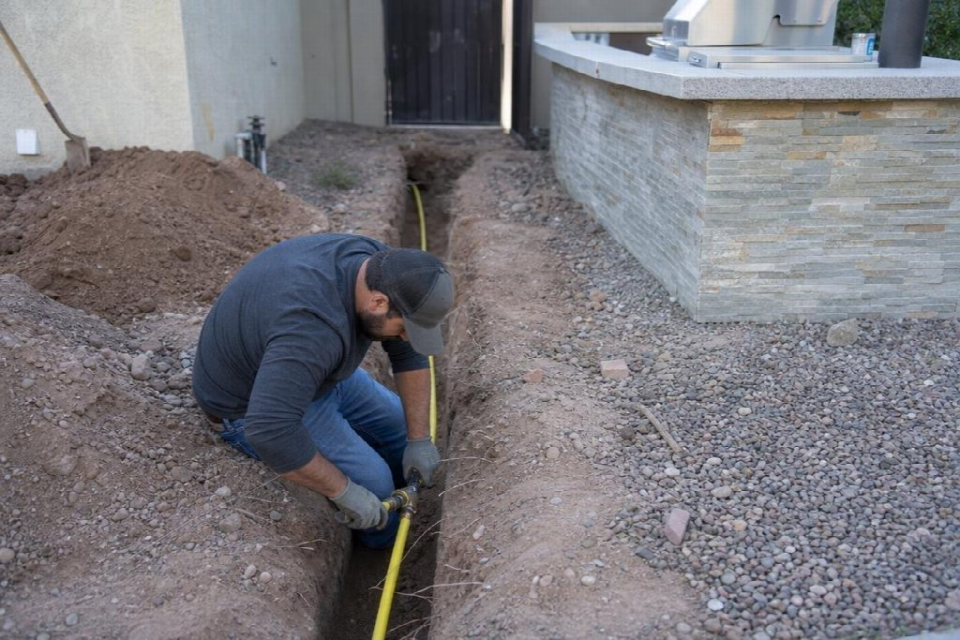
Outdoor kitchens and fire pits are among the most popular backyard upgrades in the Phoenix Valley. The mild winters and long spring and fall seasons make outdoor living a year-round reality, so a grill and fire feature earn their keep well beyond a few summer weekends. Before the first burner gets lit, homeowners need to understand what adding a gas line involves, from permits and inspections to soil conditions that can surprise even experienced crews. Penguin Air, Plumbing & Electrical, serving the Phoenix Metro Area since 2011, has earned a BBB A+ Rating helping homeowners get this work done safely and correctly.
Can I Install an Outdoor Gas Line Myself in Arizona?
No. Arizona law requires a licensed plumber for all gas line work. There is no legal DIY path. The City of Phoenix Development Services Department requires a permit before any pipe goes in the ground, and an inspector must sign off before the trench is backfilled. Skipping that step creates serious liability, can void insurance coverage, and makes a home harder to sell.
Penguin Air, Plumbing & Electrical’s gas line installation services cover outdoor kitchen plumbing in Phoenix and across the Valley, handling the permit process as part of the job.
Know What You Are Working With Before You Dig
Most Valley homes connect to natural gas at an exterior-wall meter, which simplifies outdoor runs. What surprises homeowners is the ground: central and east Phoenix yards, along with many in Tempe and Mesa, often sit over caliche hardpan, a naturally cemented layer that a standard shovel or trenching machine will not penetrate. Knowing your soil and meter location upfront is the difference between a smooth one-day install and an unexpected delay.
Tip 1: Understand What a Gas Line Extension Actually Involves

A gas line extension taps into the home’s existing natural gas supply and runs new pipe from the meter or an interior shutoff to the outdoor kitchen or fire pit. Materials are almost always CSST (corrugated stainless steel tubing) or black iron pipe, depending on run length, location, and local code.
Line sizing is based on total BTU demand. A licensed plumber calculates the combined BTU load of every connected appliance, grill, side burners, fire pit, before choosing a pipe diameter. Undersizing causes weak flames and poor performance; oversizing wastes money.
Tip 2: Know How the Line Gets from Your Meter to Your Backyard
With meters mounted on the exterior, a plumber can tap the supply line near the meter and route new pipe along the exterior wall before heading underground. The City of Phoenix requires a passed inspection before the trench is backfilled. Any contractor who suggests skipping it should not be trusted with gas work. Many HOAs in master-planned communities also require approval before permanent outdoor structures are built; Scottsdale and newer Chandler subdivisions are especially strict. Check with your association early to avoid tearing out finished work.
Tip 3: Plan for Buried Runs and Phoenix Soil
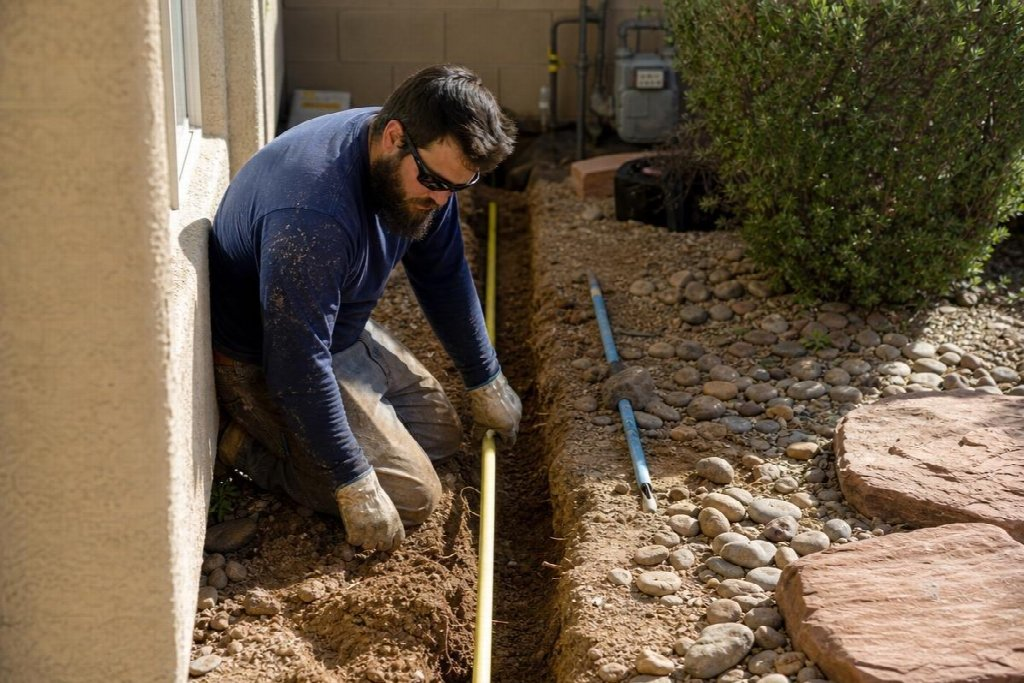
Outdoor gas lines are almost always buried, with code requiring a minimum depth of 12 to 18 inches. Where a line passes under concrete or pavers, it must be sleeved in protective conduit. Here is what affects the difficulty of that burial:
- Caliche hardpan: This calcified soil layer is common in central and east Phoenix. It does not yield to a standard shovel or typical trenching machine. Contractors who work regularly in the Valley come prepared with jackhammer equipment; those who do not can badly underestimate cost and timeline.
- Paver and concrete patios: Existing hardscape requires careful cutting and sleeve installation before backfill.
- Run length: Longer runs require larger pipe diameter to maintain adequate pressure at the appliance end.
In some Tempe and Mesa yards, a trench that looks straightforward can hit solid hardpan just inches down. Experienced Valley plumbers factor this into quotes upfront rather than issuing change orders mid-dig. When getting an estimate, ask directly whether the crew has encountered caliche in the neighborhood. Familiarity with local ground conditions is a clear sign of a plumber who knows this market.
Frequently Asked Questions
Do I Need a Permit for an Outdoor Gas Line in Phoenix?
Yes. The City of Phoenix Development Services Department requires a permit for all new residential gas line work, including outdoor kitchen and fire pit projects. The licensed contractor pulls the permit; an inspector must sign off before the trench is backfilled. Skipping the permit can result in denied insurance claims and mandatory disclosure during a home sale, which can delay or kill the transaction. Chandler, Gilbert, and Scottsdale have their own permitting departments with similar requirements.
Can I Use Propane Instead of Natural Gas for My Outdoor Kitchen?
Propane is workable, but most established Phoenix Valley neighborhoods already have natural gas at the street, making it the simpler and more cost-effective choice for a permanent outdoor kitchen, with no tank to refill or reposition. Propane requires an above-ground tank with specific placement and safety clearances that some HOAs will not approve. If natural gas is unavailable, a licensed plumber should confirm tank placement, clearances, and appliance conversion before work begins.
How Long Does a Backyard Gas Line Installation Take?
A straightforward installation typically takes one day of hands-on work. Permit processing and inspection scheduling add several business days depending on the city’s workload. Caliche hardpan, common in central and east Phoenix, can require jackhammer equipment and extend the timeline further.
What Does an Outdoor Gas Line Installation Cost in Phoenix?
Costs vary based on run length, soil conditions, and the number of appliance connections. A short trench with one connection costs less than a full outdoor kitchen layout serving a grill, side burner, and fire pit. A detailed quote from a licensed plumber after a site assessment is the most reliable way to understand the specific cost.
Can a Gas Line Run Under a Concrete Slab or Patio?
Yes. Under-slab runs are done regularly in the Phoenix area. The pipe must be sleeved inside protective conduit wherever it passes beneath concrete, a Phoenix building code requirement that protects the line from damage and allows future access. A licensed contractor will plan the routing to meet code before any concrete work begins.
About Penguin Air, Plumbing & Electrical
Penguin Air, Plumbing & Electrical is a Phoenix-based home services company founded in 2011, serving homeowners across the Greater Phoenix Metro Area with HVAC, plumbing, and electrical services. The company holds a BBB A+ Rating and has maintained BBB Accreditation since 2011, along with a Business Ethics Award. The office is located at 3710 East University Dr Suite 1, Phoenix, AZ 85034.
Business Name: Penguin Air, Plumbing & Electrical
Address: 3710 E University Dr # 1, Phoenix, AZ 85034
Phone Number: (480) 525-5400
