
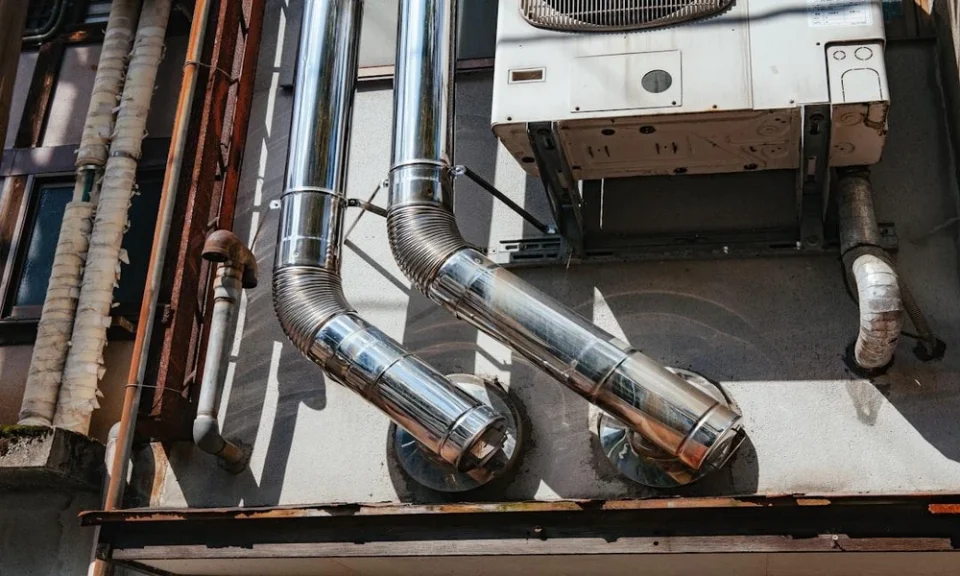
Understanding the Role of Modern Ventilation Solutions in Home Comfort
Beyond just heating and cooling, true home comfort in June 2026 hinges significantly on effective ventilation. Modern ventilation solutions are essential for maintaining optimal indoor air quality and thermal comfort, working in tandem with your heating and cooling systems.
Airflow Dynamics and Indoor Air Quality
Proper airflow dynamics are critical. Stagnant air can lead to a buildup of pollutants, allergens, and odors, negatively impacting health and comfort. Modern ventilation systems ensure a continuous exchange of indoor and outdoor air, diluting contaminants and bringing in fresh air. This fresh air exchange helps reduce the concentration of airborne viruses, bacteria, and volatile organic compounds (VOCs) that off-gas from furniture, cleaning products, and building materials.
Humidity Control
Humidity control is another vital aspect. High indoor humidity can foster mold growth, attract pests, and make your home feel clammy and uncomfortable, even at moderate temperatures. Conversely, overly dry air can lead to dry skin, irritated respiratory passages, and static electricity. Effective ventilation systems, especially those integrated with advanced HVAC, help maintain ideal indoor humidity levels, typically between 30% and 50%, preventing these issues.
Balanced and Mechanical Ventilation
Achieving balanced ventilation means ensuring that the amount of air entering your home is roughly equal to the amount leaving it. This prevents issues like negative pressure (which can draw in outdoor pollutants and combustion gases) or positive pressure (which can push humid air into wall cavities, leading to condensation problems). Mechanical ventilation systems, such as exhaust fans, supply fans, and balanced systems like Heat Recovery Ventilators (HRVs) and Energy Recovery Ventilators (ERVs), provide controlled and continuous airflow, unlike natural ventilation which relies on drafts and open windows. These systems are designed to deliver consistent fresh air without significant energy penalties.
How Heat Pumps Provide Energy-Efficient Heating and Cooling
At the heart of modern, energy-efficient home comfort lies the heat pump. Unlike traditional furnaces that generate heat by burning fuel or electric resistance, or air conditioners that only cool, a heat pump is a versatile, all-in-one electric system designed to transfer heat. This fundamental difference is key to understanding its superior efficiency.
What is a Heat Pump?
A heat pump is essentially a two-way air conditioner. It doesn’t create heat; instead, it moves thermal energy from one place to another. In heating mode, it extracts heat from a colder source (like the outdoor air or ground) and transfers it indoors. In cooling mode, it reverses this process, pulling heat from inside your home and expelling it outside, much like a refrigerator or a standard air conditioner. This ability to simply move existing heat, rather than generating it, is why heat pumps are incredibly efficient.
How Does a Heat Pump Differ from an Air Conditioner or Furnace?
The primary distinction is its dual functionality. A conventional air conditioner only cools by moving heat out of your home. A furnace only heats, typically by burning fossil fuels or using electric resistance. A heat pump, however, performs both functions using the same core technology. This means one system can handle your year-round comfort needs, eliminating the need for separate heating and cooling units.
The Key Components of a Heat Pump System
A heat pump system comprises several critical components working in harmony:
- Outdoor Unit: Contains the compressor, outdoor coil (which acts as either a condenser or evaporator), and a fan.
- Indoor Unit (Air Handler): Houses the indoor coil (the other heat exchanger), a fan, and often a supplemental electric resistance heater for extreme cold.
- Refrigerant: A special fluid (like R-410A or newer, more environmentally friendly options) that circulates through the system, absorbing and releasing heat as it changes state between liquid and gas.
- Compressor: The “heart” of the system, it pressurizes the refrigerant, increasing its temperature and moving it through the coils.
- Expansion Valve (or Metering Device): Regulates the flow of refrigerant and causes it to depressurize, lowering its temperature.
- Reversing Valve: This ingenious component is what allows the heat pump to switch between heating and cooling modes.
The Refrigeration Cycle: Enabling Both Heating and Cooling
The magic behind a heat pump’s operation is the refrigeration cycle, a continuous process where refrigerant absorbs and releases heat through phase changes (liquid to gas and back). This cycle is the same principle found in your refrigerator or air conditioner, but with the added ability to reverse direction.
The four main stages of the refrigeration cycle are:
- Evaporation: The cold, low-pressure liquid refrigerant passes through a coil (the evaporator). It absorbs heat from the surrounding air (either inside your home for cooling, or outside for heating), causing it to boil and turn into a low-pressure gas.
- Compression: The gaseous refrigerant then enters the compressor, which increases its pressure and temperature significantly. This hot, high-pressure gas is now ready to release its absorbed heat.
- Condensation: The hot, high-pressure gas flows into another coil (the condenser). Here, it releases its heat to the cooler surrounding air (outside for cooling, or inside for heating), causing it to condense back into a high-pressure liquid.
- Expansion: Finally, the high-pressure liquid refrigerant passes through an expansion valve, which rapidly reduces its pressure and temperature, returning it to a cold, low-pressure liquid state, ready to begin the cycle again.
How a Heat Pump Works in Heating Mode
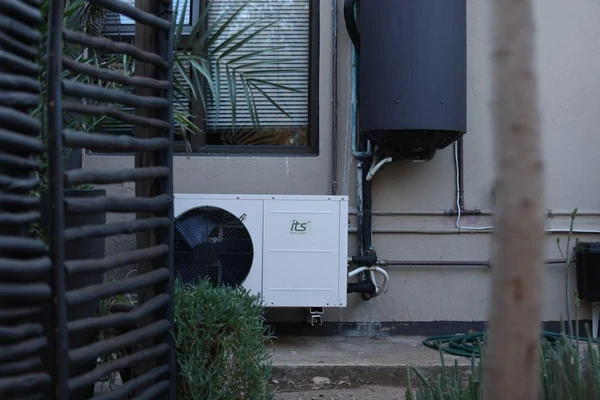
In heating mode, the heat pump extracts heat from the outdoor air, even when it’s cold. The outdoor coil acts as the evaporator, absorbing heat from the ambient air. The compressor then increases the refrigerant’s temperature and pressure. The hot, high-pressure refrigerant then flows to the indoor coil, which acts as the condenser, releasing its heat into your home’s air. The indoor fan circulates this warmed air throughout your living space.
How a Heat Pump Works in Cooling Mode
When cooling your home, the heat pump reverses the flow of refrigerant. The indoor coil becomes the evaporator, absorbing heat from your home’s warm indoor air. The compressor still pressurizes the refrigerant, but the reversing valve directs the hot, high-pressure refrigerant to the outdoor coil, which now acts as the condenser. Here, it releases the absorbed heat into the cooler outdoor air. The outdoor fan helps dissipate this heat, and the cooled indoor air is recirculated throughout your home. This process is identical to how a standard air conditioner operates. For a deeper dive into heat pump mechanics, consider exploring a comprehensive B&G Heating heat pump guide.
The Role of the Reversing Valve
The reversing valve is the ingenious component that makes a heat pump so versatile. It’s a four-way valve located in the outdoor unit that literally reverses the direction of the refrigerant flow. In heating mode, it directs the hot, high-pressure refrigerant to the indoor coil. In cooling mode, it redirects it to the outdoor coil. This simple yet critical component allows the heat pump to switch seamlessly between providing warmth in winter and cool relief in summer.
What is the Coefficient of Performance (COP) and Why is it Important?
The efficiency of a heat pump is measured by its Coefficient of Performance (COP). COP is the ratio of the heating or cooling output to the electrical energy input. For example, if a heat pump produces 4 units of heat for every 1 unit of electricity consumed, its COP is 4. Unlike traditional heating systems that convert fuel or electricity directly into heat (with a maximum efficiency of 100%), heat pumps simply move heat, allowing their COP to be greater than 1, often ranging from 3 to 5. This means a heat pump can deliver 300% to 500% efficiency, making it incredibly energy-efficient.
How Efficient Are Heat Pumps Compared to Traditional Heating Systems?
The statistics speak for themselves. An electric heat pump can achieve efficiencies of up to 300% or even 500% (COP 3-5), whereas even the most efficient gas furnace typically maxes out at around 98% efficiency. This makes heat pumps 2 to 3 times, and often 3 to 5 times, more energy efficient than traditional heating systems like fossil fuel furnaces and boilers. At the cost of 1 kWh of electricity, heat pumps can transfer 1 to 4.5 kWh of thermal energy into a building. This significant difference translates directly into lower energy bills and a reduced carbon footprint.
At What Temperatures Do Heat Pumps Work Best, and How Do They Perform in Cold Climates?
Historically, a common misconception was that heat pumps struggled in cold climates. While their efficiency (COP) does decrease as the outdoor temperature drops, modern cold-climate heat pumps have made remarkable advancements. Many current models can provide 100% heating down to 5°F (-15°C) and operate effectively down to -13°F (-25°C) or even -22°F (-30°C). Even in freezing conditions, outdoor air contains extractable thermal energy for heating, as refrigerant can be made colder than the ambient air. In regions accounting for 70% of world energy consumption, heat pumps reduce emissions by over 45% compared to high-efficiency gas boilers, reaching 80% in countries with cleaner electricity.
For homes in particularly frigid climates, hybrid or dual-fuel systems are an excellent solution. These systems pair a heat pump with a traditional furnace (often gas) that automatically takes over when temperatures drop below a certain threshold (e.g., 35°F or 40°F), ensuring comfort and optimizing efficiency across varying conditions.
What Are the Pros and Cons of Different Heat Pump Types?
There are several main types of heat pumps, each with its own advantages and considerations:
- Air-Source Heat Pumps (ASHPs): These are the most common and cost-effective. They extract heat from (or release it to) the outdoor air. They are versatile, available in ducted central systems, or ductless mini-splits. ASHPs are ideal for many climates, including much of Ontario. Their main con is that efficiency can decrease in extremely cold temperatures, although modern models are significantly improving this.
- Ground-Source Heat Pumps (GSHPs) / Geothermal: These systems exchange heat with the stable temperatures of the earth via buried loops. They offer the highest efficiency (COP typically 3-6) and consistent performance regardless of outdoor air temperature. The main con is a higher upfront installation cost due to the excavation required for the ground loops, though they offer lower operating costs and longer lifespans for the underground components (50+ years).
- Ductless Mini-Split Heat Pumps: These are a type of air-source heat pump that doesn’t require ductwork. They consist of an outdoor unit connected to one or more indoor wall-mounted, ceiling-mounted, or floor-standing units. They offer zoned heating and cooling, allowing individual temperature control for different rooms or areas. They are excellent for homes without existing ductwork, additions, or for targeted comfort zones. Their cons include the visible indoor units and potentially higher cost per zone compared to a single central ducted system.
How Do Factors Like Home Size, Insulation, and Climate Affect Heat Pump Performance?
Heat pump performance is highly dependent on several factors:
- Home Size and Layout: Larger homes require more powerful systems. Zoned systems (like ductless mini-splits) can be more efficient for complex layouts.
- Insulation and Air Sealing: A well-insulated, airtight home retains conditioned air better, reducing the workload on the heat pump and improving efficiency. Poor insulation means the heat pump has to work harder to maintain desired temperatures, particularly in extreme weather.
- Climate: As discussed, while modern heat pumps perform well in cold climates, the colder the average winter temperature, the more important it is to select a cold-climate model or consider a dual-fuel system. Milder climates are generally ideal for standard ASHPs.
Integrating Heat Pumps with Advanced Ventilation Solutions
The synergy between heat pumps and advanced ventilation systems is crucial for achieving optimal indoor air quality and energy efficiency. While heat pumps handle the thermal conditioning, ventilation ensures the air itself is fresh and healthy.
Ducted Systems and Air Filtration
In homes with ducted heat pump systems, the existing ductwork can be leveraged for integrated ventilation. High-quality air filtration, often achieved through MERV-rated filters within the heat pump’s air handler, is essential. These filters capture dust, pollen, pet dander, and other airborne particulates, contributing significantly to cleaner indoor air. Regular filter replacement is paramount for both air quality and system efficiency.
Heat Recovery Ventilators (HRVs) and Energy Recovery Ventilators (ERVs)
For truly advanced ventilation, Heat Recovery Ventilators (HRVs) and Energy Recovery Ventilators (ERVs) are game-changers. These mechanical ventilation systems continuously exhaust stale indoor air and bring in fresh outdoor air, but with a critical difference: they recover energy from the outgoing air.
- HRVs transfer heat between the outgoing and incoming air streams. In winter, they capture heat from the warm exhaust air to pre-warm the cold incoming fresh air, reducing the heat pump’s workload. In summer, they transfer heat from the incoming hot air to the cooler exhaust air, pre-cooling the fresh air.
- ERVs do everything an HRV does, but they also transfer moisture. This is particularly beneficial in humid climates during summer (removing humidity from incoming air) and dry climates during winter (adding humidity to incoming air), helping to maintain comfortable indoor humidity levels while further reducing the heat pump’s energy consumption.
Integrating an HRV or ERV with your heat pump system ensures that you get a continuous supply of fresh, filtered air without wasting the energy you’ve already spent conditioning it. This is a powerful combination for efficiency and comfort, especially relevant for those seeking comprehensive heat pump services in locations like Hannon, ON.
Key differences at a glance
| Feature | Heat Recovery Ventilator (HRV) | Energy Recovery Ventilator (ERV) |
|---|---|---|
| Primary Role | Transfers heat only | Transfers both heat and moisture |
| Best For | Cold, dry climates where humidity is not a major concern | Humid climates in summer or very dry climates in winter where humidity control matters |
| Benefit | Reduces heating/cooling load by pre-conditioning incoming air | Reduces heating/cooling load and helps balance indoor humidity |
| Process | Transfers heat from exhaust air to incoming fresh air through a heat-exchange core | Transfers both heat and moisture between exhaust and incoming fresh air |
As homeowners increasingly consider heat pumps and integrated ventilation, several common questions arise. We aim to address these to provide clarity and empower informed decisions.
How Do Ventilation Solutions Improve Heat Pump Efficiency?
Ventilation solutions, particularly HRVs and ERVs, significantly improve heat pump efficiency through several mechanisms:
- Thermal Retention: By recovering heat (and moisture with ERVs) from outgoing air, these systems reduce the amount of energy the heat pump needs to spend conditioning the fresh incoming air. This means less work for the heat pump, leading to lower energy consumption.
- Airflow Optimization: Balanced ventilation prevents uncontrolled air leakage (infiltration and exfiltration), which can introduce unconditioned air and force the heat pump to work harder. By providing controlled fresh air, the heat pump can maintain desired temperatures more easily.
- Reduced Humidity Load: ERVs are particularly effective at managing humidity. In summer, they reduce the amount of humid air entering your home, lessening the dehumidification burden on your heat pump. This allows the heat pump to operate more efficiently in cooling mode.
- Consistent Performance: A well-ventilated home maintains more stable indoor conditions, allowing the heat pump to operate within its optimal performance range more consistently.
Understanding heat pump efficiency is crucial, and you can learn more about metrics like SEER ratings to assess system performance.
How Do Ventilation Solutions Integrate with Ductless Mini-Splits?
Ductless mini-split heat pumps offer zoned comfort and are excellent for homes without existing ductwork or for specific areas. However, they typically do not provide mechanical ventilation themselves. Integrating ventilation solutions with mini-splits usually involves:
- Dedicated Ventilation System: Installing a separate HRV or ERV system that uses its own small ductwork to distribute fresh air to key areas of the home, while exhausting stale air. This system operates independently but complements the mini-splits by ensuring fresh air without compromising their zoned heating and cooling.
- Spot Ventilation: Using strategically placed exhaust fans (e.g., in bathrooms and kitchens) combined with passive fresh air inlets, though this is less controlled than a balanced HRV/ERV system.
This combination allows homeowners to enjoy the highly efficient, zoned heating and cooling of mini-splits while ensuring continuous fresh air exchange for optimal indoor air quality.
What Maintenance Do These Combined Systems Require?
Regular maintenance is key to ensuring the longevity, efficiency, and reliable operation of both your heat pump and integrated ventilation system.
- Heat Pump Maintenance:Filter Replacement: Check and replace air filters monthly or quarterly, depending on usage and household conditions. Dirty filters restrict airflow, reduce efficiency, and can damage the system.
- Coil Cleaning: Have a professional clean the indoor and outdoor coils annually. Dirt and debris on coils hinder heat transfer.
- Outdoor Unit Clearance: Keep the outdoor unit free of obstructions like leaves, snow, or debris to ensure proper airflow.
- Professional Inspections: Schedule annual or bi-annual professional tune-ups (before heating and cooling seasons) to check refrigerant levels, electrical connections, fan motors, and overall system operation. This can help identify potential issues before they become costly repairs. If you notice signs you need heat pump repair, it’s best to contact an expert promptly.
- Ventilation System (HRV/ERV) Maintenance:Filter Cleaning/Replacement: Clean or replace the filters in your HRV/ERV every 3-6 months.
- Core Cleaning: The energy transfer core should be cleaned annually or bi-annually, as per manufacturer recommendations.
- Duct Inspection: Periodically check the ventilation ducts for blockages or leaks.
- Professional Check-up: Include your ventilation system in your annual HVAC inspection to ensure it’s operating correctly and efficiently.
Regular maintenance not only extends the life of your systems but also ensures they continue to deliver optimal performance and energy savings. For comprehensive maintenance and Heat Pump Repair Hamilton, always consult with certified HVAC professionals.
Conclusion
In June 2026, the pathway to superior home comfort and energy efficiency clearly involves the synergy of advanced heat pump technology and modern ventilation solutions. Heat pumps, with their remarkable ability to transfer heat for both heating and cooling, offer an environmentally responsible and cost-effective alternative to traditional HVAC systems. When paired with intelligent ventilation systems like HRVs and ERVs, homes can achieve an unparalleled level of indoor air quality, balanced humidity, and consistent thermal comfort, all while minimizing energy consumption.
Embracing these integrated solutions represents a smart investment in your home’s long-term comfort, health, and sustainability. By understanding how these systems work and committing to regular maintenance, homeowners can enjoy a truly optimized living environment for years to come.
For personalized advice and expert installation of heat pump and ventilation systems, we encourage you to connect with local HVAC professionals.
