
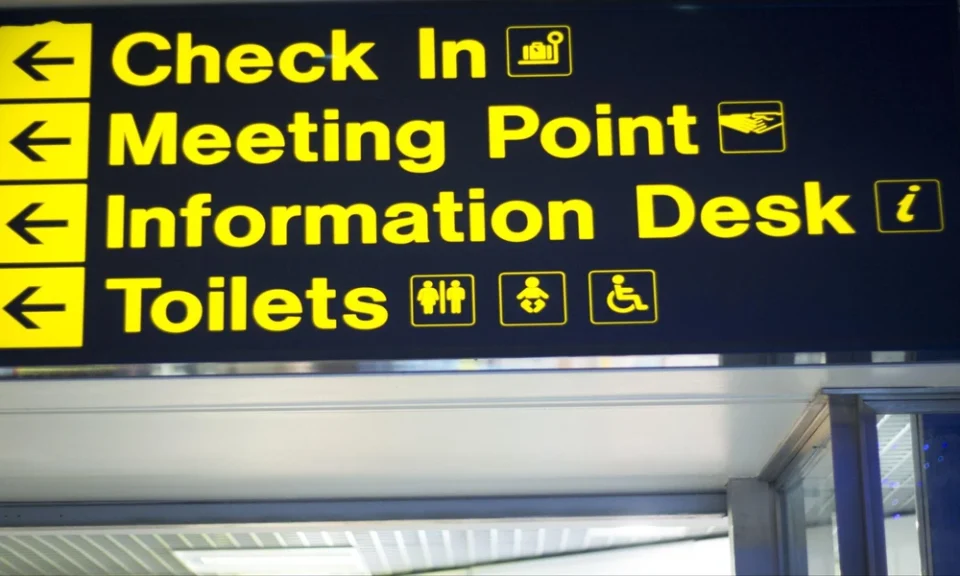
Exhibition stands often need to accommodate several activities within a limited area, including product displays, demonstrations, conversations and visitor movement. Navigation therefore needs to be considered alongside branding and presentation when planning the space.
Experienced expo stand builders may consider circulation routes, display positioning and sightlines as part of the overall stand design. These elements work together to help visitors understand where they can enter, move and stop without creating unnecessary congestion.
What Makes an Exhibition Stand Easy for Visitors to Navigate?
An easy-to-navigate stand generally provides visitors with clear visual and physical cues. People should be able to identify accessible entrances, main displays and areas where they can speak with staff without having to determine an unclear route.
Several practical elements contribute to this:
- Visible entrances: Entry points should be identifiable from the surrounding aisle.
- Unobstructed pathways: Furniture, equipment and displays should not unnecessarily narrow circulation areas.
- Clear sightlines: Visitors should be able to see important displays and information from relevant positions.
- Defined activity zones: Demonstrations, conversations and product displays can be organised into separate areas.
- Accessible circulation: Routes should account for visitors with different mobility requirements.
Together, these elements establish the basic structure for visitor movement. The stand layout then determines how these features connect.
How Does an Exhibition Stand Layout Guide Visitor Flow?
Layout affects how visitors enter, move through and leave a stand. The appropriate arrangement depends on factors such as stand size, available aisle access, display requirements and the activities taking place within the space.
| Layout consideration | Navigation purpose |
| Open entrances | Allow visitors to identify available access points |
| Clear pathways | Support movement between stand areas |
| Defined zones | Separate displays, meetings and demonstrations |
| Open sightlines | Make destinations easier to identify |
| Suitable exit routes | Help visitors leave without crossing congested areas |
For example, placing a demonstration directly beside a narrow entrance may cause visitors to gather where others need to pass. Moving stationary activities away from primary circulation routes can reduce this conflict.
A logical layout therefore establishes where people move and where they stop. Once these routes are defined, signage can provide additional guidance.
How Can Signage and Wayfinding Improve Exhibition Stand Navigation?
Signage communicates where visitors are and where relevant features can be found. Depending on the stand, this may include directional signs, product categories, demonstration areas or meeting spaces.
A sign maker may produce different sign formats according to viewing distance, installation location and the information being communicated. Regardless of format, navigation signage should generally use concise wording, readable typography and sufficient contrast between text and its background.
Effective wayfinding may include:
- Directional signs positioned near decision points.
- Overhead or elevated signs that remain visible when the stand is busy.
- Consistent terminology for different areas.
- Clear labels for products, services or activity zones.
- Signs positioned where furniture or visitors are less likely to obstruct them.
Signage works most effectively when it reinforces an understandable layout rather than compensating for a confusing one. Physical objects within the stand must therefore support the same circulation plan.
How Does the Placement of Displays and Furniture Affect Navigation?
Displays and furniture can create boundaries between different functional areas, but poor positioning may also restrict movement. Large counters, seating and freestanding displays should therefore be considered in relation to entrances and primary pathways.
Frequently used areas may require additional space because visitors can remain there for longer periods. Demonstration stations and consultation tables, for example, can attract groups that temporarily reduce available circulation space.
Working with expo stand builders during spatial planning can help coordinate display dimensions with available floor space. The objective is to maintain usable routes while providing sufficient areas for the stand’s intended activities.
Furniture and display placement define the physical route through the stand. Lighting and visual design can then reinforce this structure.
How Can Lighting and Visual Design Support Easier Navigation?
Lighting can help distinguish displays, information points and activity zones. General illumination supports safe movement, while focused lighting can draw attention to specific products or areas without changing the physical layout.
Visual hierarchy also helps visitors determine what information to notice first. Differences in text size, positioning and contrast can distinguish primary messages from supporting details.
A sign maker can coordinate signage dimensions and readability with the wider visual system. Consistency across signs, displays and information points can make different areas easier to recognise as visitors move through the space.
Lighting and visual design therefore act as navigation aids alongside layout, signage and furniture placement. When these elements follow the same spatial logic, visitors receive clearer cues about where to move and where to stop.
FAQs
What is visitor flow in exhibition stand design?
Visitor flow describes how people enter, move through and exit an exhibition stand. It is influenced by pathways, entrances, displays, furniture and activity zones.
How can congestion be reduced in an exhibition stand?
Keeping entrances and primary routes clear can reduce movement conflicts. Activities that encourage groups to gather can also be positioned away from narrow circulation areas.
Why is wayfinding important at exhibitions?
Wayfinding helps visitors identify destinations and understand how to move through a space. Clear signs can support an already logical exhibition stand layout.
Where should exhibition stand signage be placed?
Signs should be positioned where intended audiences can see and read them. Directional signs are particularly useful near entrances, intersections and other points where visitors need to choose where to go.
How does furniture affect exhibition stand navigation?
Furniture can organise functional zones but may create obstructions if placed within circulation routes. Its dimensions and position should therefore be considered as part of the overall floor plan
Contact Sui Generis Neon to consult experienced expo stand builders and develop a layout and signage system that supports clear, accessible navigation. .
