
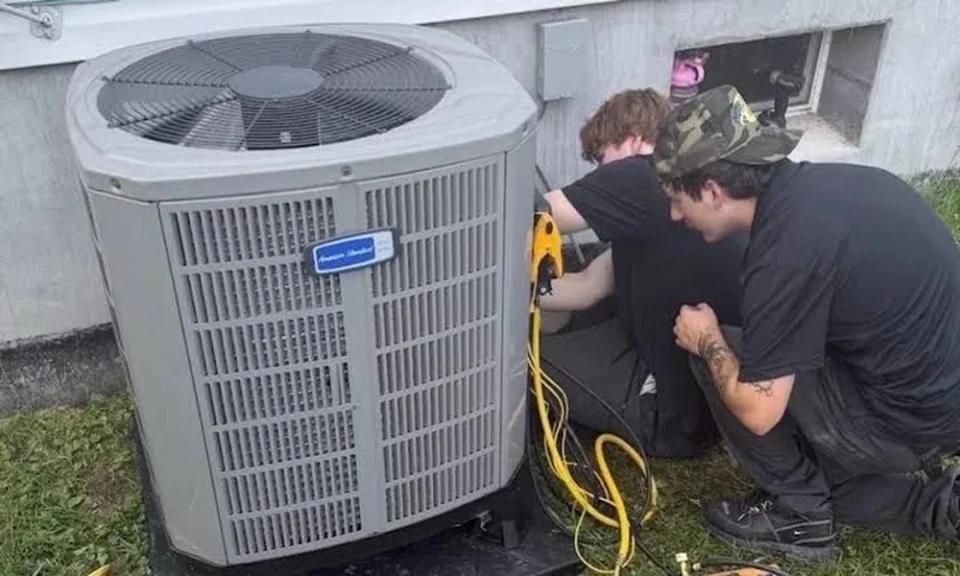
The thermostat reads 76, cold air is coming out of the vents, and yet the couch cushions feel faintly damp and the bathroom mirror takes forever to clear. Plenty of homeowners live with this for years and assume it’s just how Florida feels indoors. It isn’t. That clammy feeling means the air conditioner is finishing only part of its work.
Anyone who has spent a few summers here learns that heat is the easy enemy. Moisture is the stubborn one, and it gets into the house with every opened door, every shower and every pot of boiling pasta. Local contractors like Hilling Air Conditioning, Inc, a small family and veteran owned company based in Greenacres that handles homes and businesses across Palm Beach County, regularly get service calls that start with “it’s cooling, but something feels off.” Once you understand why that happens, it gets much easier to fix.
Two Kinds of Heat Sharing the Same Air
Engineers split a cooling load into two parts. Sensible heat is what a thermometer reads. Latent heat is the energy held inside water vapor, and it never shows up on the thermostat. In a desert, nearly all of an air conditioner’s effort goes toward sensible heat. In South Florida, a big share of every cooling hour goes into pulling water out of the air. When that share gets shortchanged, the house feels cold and sticky at the same time.
Most people feel comfortable when indoor relative humidity sits around 45 to 55 percent. When it stays above 60 percent for long stretches, mold, mildew and dust mites start to thrive. Wood floors swell, and closets pick up a musty smell that never really goes away.
Where the Water Actually Leaves the House
The evaporator coil sits inside the air handler. It’s a dense bank of thin metal fins chilled by refrigerant. As warm room air passes over it, the fins drop below the dew point and moisture condenses on them, the same way water beads on a glass of iced tea. The droplets have to build up, fall into the drain pan and run out through the condensate line.
That timing matters more than most people realize. A system that runs in long, steady cycles gives the coil time to get fully cold and keep shedding water. A system that runs in short bursts barely wets the fins before it shuts off, and some of that moisture just evaporates back into the rooms.
Why a Bigger Unit Often Backfires
After a miserable August, the instinct is to ask for more tonnage. In a humid climate, that often makes things worse. An oversized system drops the temperature so fast that the thermostat is satisfied within minutes, long before the coil has done much drying. The house hits its setpoint and stays damp.
The University of Florida IFAS Extension guide to home air conditioning says that systems sized close to the actual load control humidity better. It also says sizing should come from a proper load calculation such as ACCA Manual J, not from square footage alone. The same guide notes that many high efficiency units remove less moisture, so the contractor should confirm the equipment can handle the latent load the calculation shows. A careful Manual J accounts for window orientation, insulation, shade, duct location and how many people live in the house. That’s why two identical floor plans on the same street can end up needing different equipment.
Small Habits and Hidden Faults That Keep Rooms Damp
Even a correctly sized system can be undermined by small things. Some are thermostat settings, some are maintenance and some are hidden in the attic.
The fan switch is a common culprit. Leaving the thermostat fan set to On instead of Auto keeps air moving across a wet coil after the compressor stops, which blows the collected water right back into the house. Switching to Auto lets the coil drain first.
Florida’s warm, wet conditions also make the condensate line a perfect home for algae. When the line clogs, water backs up into the pan. Sometimes a float switch shuts the whole system off, and sometimes the water spills over into a ceiling. Flushing the line on a regular schedule, using whatever method the equipment manufacturer recommends, keeps it flowing.
Then there are the ducts. Most homes in the region run ductwork through a scorching attic. A leaky return duct pulls in hot, moisture-laden attic air and pushes it straight into the living space, and no thermostat setting can make up for that.
A few signs suggest a home is holding more moisture than it should.
- Condensation on the inside of windows or around supply registers
- A musty smell in closets, under sinks or in the air handler closet
- Mildew spots on grout, stored shoes or leather bags
- Readings above 60 percent on an inexpensive indoor hygrometer
- Rooms that feel cool but clammy even after the thermostat is satisfied
The Seasonal Home Problem
Palm Beach County has a large population of seasonal residents, and closing a house up for the summer creates its own moisture trap. Turning the AC off completely invites mold within weeks. Setting the thermostat very high causes a quieter version of the same problem, because the system rarely runs long enough to dry anything. Many owners choose a moderate setting in the high 70s or low 80s and pair it with a humidistat or a smart thermostat that has a dehumidify mode. That way the system kicks on when moisture climbs, even if the temperature hasn’t moved.
It’s also worth having someone check on the house after storms. A power outage of a day or two in late summer can undo months of careful moisture control, and nobody notices until the owner opens the door in November.
Equipment Designed Around Moisture
Equipment has gotten better at dealing with humidity. Variable speed and two stage systems can run at low output for long stretches, which is exactly what a coil needs to keep wringing water out of the air. Some thermostats can slow the blower when humidity rises, so the coil runs colder and pulls out more water. For tightly built newer homes, or older ones with stubborn mildew, a whole house dehumidifier tied into the ductwork controls moisture separately from temperature.
None of these is a universal answer. A home with a well matched single stage unit might only need a fan setting change and a cleaner coil. A home that fights mildew every August may be better off with variable speed equipment the next time its system wears out.
Measuring Comfort in Two Numbers
The most useful change is to judge comfort by two numbers instead of one. A house at 78 degrees and 50 percent humidity usually feels better than one at 74 degrees and 65 percent, and it costs noticeably less to run. A cheap hygrometer on a bookshelf will tell you which kind of house you have within a week.
When the humidity reading stays high no matter what the thermostat says, the cause is usually one of the things above: a system too large for the house, a coil coated in dust, a fan that never stops, a drain line slowly filling with algae or a duct breathing attic air into the hallway. Each one can be found and fixed. Once the moisture comes down, the house feels comfortable at a higher setting, and the electric bill drops too.
