
A lake home in Horseshoe Bay, Texas can be a place to spend weekends with family, enjoy time on the water, or simply get away from the normal routine. But because many lake properties are used part-time, a power outage can create a different set of concerns than it would at a full-time residence.
If the electricity goes out while you are at the house, you know about it immediately. You can check the refrigerator, reset equipment, protect important electronics, and make decisions about how long you want to run a portable generator. When the property is several hours away or nobody is staying there, however, an outage can continue unnoticed.
That makes backup power worth considering for more than just keeping the lights on.
A properly planned portable generator interlock system can allow a homeowner to connect a portable generator to selected circuits in the home’s electrical panel. Instead of trying to power every electrical device in the house, the homeowner can prioritize the systems that matter most during an outage.
For a Horseshoe Bay lake home, those priorities might include refrigeration, security equipment, internet service, garage access, smart locks, alarms, outdoor refrigerators, or other essential systems.
When it comes to adding a portable generator interlock kit for backup power, homeowners in Horseshoe Bay, Texas can work with Tejas Electric for professional electrical services.
Why Lake Homes Have Different Backup-Power Needs
A second home or vacation property doesn’t always have someone there to notice when something stops working.
Imagine leaving your Horseshoe Bay property on Sunday afternoon after a great weekend at the lake. Everything is working normally when you leave. Then, sometime Monday, a storm moves through the area and the power goes out.
The house may sit without electricity for hours or potentially longer.
The refrigerator and freezer are no longer operating normally. Security cameras may stop recording. Internet equipment may go offline. A smart lock could lose its normal connection. Garage-door equipment may be unavailable when you return. Pool equipment may also be affected depending on how the system is configured.
None of these problems necessarily means a major disaster is going to occur. The issue is that a property sitting unattended has fewer opportunities for someone to catch a developing problem.
A backup-power plan gives homeowners another layer of protection.
It also doesn’t necessarily mean installing a permanently mounted standby generator. For some lake properties, a portable generator combined with a properly installed generator inlet and panel interlock can provide a practical backup option.
Keeping Refrigerators and Freezers Running During an Outage
Refrigeration is one of the most obvious priorities during a prolonged power outage.
A refrigerator doesn’t need to operate every second for food to remain cold, but an extended outage can eventually become a serious problem. A freezer filled with food can also represent a significant financial loss if temperatures remain elevated for too long.
For a lake house that isn’t occupied every day, the situation can be even more frustrating because nobody may discover the outage immediately.
Depending on the home’s electrical configuration and the generator’s capacity, refrigeration circuits can be included among the circuits designated for backup power.
The goal isn’t necessarily to run every appliance simultaneously. Instead, the electrical system can be planned around the loads that are most important.
For example, a homeowner may decide that the generator should prioritize:
- Refrigerator
- Freezer
- Security system
- Internet equipment
- Selected lighting
- Garage door
- Smart-home equipment
- Certain outlets
- Essential HVAC equipment, if the generator has sufficient capacity
The actual circuit selection should be based on the home’s electrical system, the generator being used, and the expected electrical loads.
Keeping Security and Connectivity Online
Security is another major consideration for an unoccupied lake property.
Modern homes often depend on more electrical equipment than homeowners realize. Cameras, alarm systems, Wi-Fi equipment, network devices, smart locks, garage-door openers, access-control equipment, and other connected systems may all depend on electricity.
When power disappears, these systems can disappear with it.
Keeping the security system and networking equipment operational may give homeowners a way to monitor the property remotely. Cameras can continue operating if their associated equipment has backup power, while internet equipment may remain available if the internet provider’s service is still functioning in the area.
There are limits, of course. A generator at the home cannot restore an internet service provider’s equipment that has also lost power elsewhere. Cellular connectivity and other communication systems can also be affected by a widespread outage.
Still, maintaining the electrical circuits serving the home’s own security and communications equipment can be an important part of an overall backup strategy.
Smart locks and garage doors deserve consideration as well. Homeowners don’t necessarily want to arrive at their lake house after an outage and discover that their normal method of entering the property isn’t working as expected.
Prolonged Power Loss Can Create Other Problems
The concern with an outage isn’t always the electricity itself.
A prolonged loss of power can affect several systems throughout a property. Refrigeration is an obvious example, but there can also be concerns involving security, communications, environmental controls, pumps, and other equipment.
This is particularly relevant for properties that may remain empty for days or weeks.
Rather than attempting to back up every electrical load, homeowners can take a more practical approach: identify what absolutely needs to operate, determine what can wait, and make sure the electrical system is configured appropriately for those priorities.
That approach can also help prevent a homeowner from buying a portable generator that is far larger than necessary.
Choosing Which Circuits Get Generator Power
One of the biggest advantages of a properly installed interlock system is the ability to select specific circuits for backup power.
A portable generator has a limited amount of electrical capacity. Trying to operate too many large appliances at the same time can overload the generator.
A homeowner might want to back up the refrigerator, freezer, security equipment, selected lights, garage, internet equipment, and a few important receptacles while leaving larger loads disconnected.
Other homes may have different priorities.
For example, a Horseshoe Bay lake property might have an outdoor refrigerator near an entertaining area, specialized equipment in a garage, or other property-specific electrical loads that are more important than they would be at a typical suburban home.
The electrician can evaluate the electrical panel and discuss which circuits make sense to place on the backup-power plan.
The generator’s available wattage and starting requirements also need to be considered. Motors can have higher startup demands than their normal running wattage, so simply adding the wattage printed on several appliances isn’t always enough to determine whether a generator can handle them simultaneously.
Where Should the Generator Inlet Be Located?
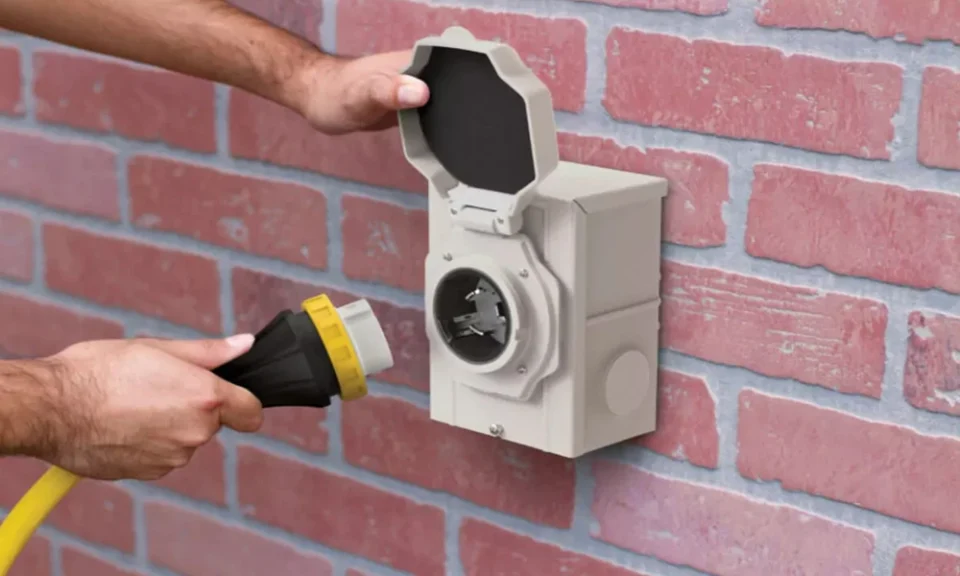
The generator inlet is the connection point where the portable generator connects to the home’s electrical system.
Its location matters.
A homeowner needs a practical place to connect the generator without creating an unsafe setup involving long extension cords running through doors, windows, or living spaces.
The inlet should be installed in a location that works with the property’s layout while also allowing the portable generator to remain outside in an appropriate operating location.
Generator placement is especially important because portable generators produce carbon monoxide and must never be operated inside a home, garage, enclosed patio, or other enclosed or inadequately ventilated area.
The generator also needs to be positioned according to applicable safety requirements and the manufacturer’s instructions, with appropriate clearance from the house and openings.
An electrician can help plan the inlet location around the existing electrical panel and the physical layout of the lake property.
How a Portable Generator Interlock Works
A generator interlock is designed to control how power reaches the home’s electrical panel.
The basic concept is straightforward.
The interlock prevents the utility supply and generator supply from being connected to the home’s electrical system in a way that could cause both sources to energize the panel at the same time.
When utility power is available, the home operates normally from the electrical grid.
During an outage, the homeowner follows the system’s operating procedure to disconnect the utility supply and connect the generator through the designated inlet. The interlock mechanism allows the generator to supply the selected panel circuits while preventing the utility and generator sources from being energized together.
This is an important safety function.
A generator should never simply be connected to a household receptacle to send electricity back through the home’s wiring. That type of improvised connection can create serious hazards.
A properly designed generator connection provides a controlled way to use portable generator power through the home’s electrical distribution system.
What About Outdoor Refrigerators, Pool Equipment, and Other Lake-Home Loads?
Every lake property is a little different.
Some homes have outdoor kitchens. Others have pool equipment, additional refrigerators, boat-related equipment, workshops, detached garages, or extensive outdoor living areas.
These systems can complicate backup-power planning because the homeowner may want them to remain operational, but the generator may not have enough capacity to operate everything at once.
Pool equipment is a good example.
A pool pump may require substantially more power during startup than its normal operating load. Depending on the generator and the home’s electrical configuration, the homeowner may decide that pool equipment is a lower priority during a major outage.
An outdoor refrigerator could be a higher priority.
There isn’t one universal list of circuits that every lake house should have on generator power. The right configuration depends on the property, the generator, the electrical panel, and the homeowner’s priorities.
That is why load planning should happen before the interlock is installed.
Whole-Home Surge Protection Can Complement Generator Planning
Backup power and surge protection solve different electrical problems, but they can complement each other.
A whole-home surge protector can help protect electrical equipment from transient voltage surges that can occur through the electrical system.
That can be particularly useful in a home containing expensive electronics, appliances, smart-home equipment, entertainment systems, security equipment, and other sensitive devices.
A generator interlock doesn’t replace surge protection, and surge protection doesn’t replace a properly designed backup-power system.
Instead, they can be considered as two separate pieces of a broader electrical protection strategy.
For a lake home, that strategy may include generator backup, whole-home surge protection, properly maintained electrical equipment, and a plan for what to do when severe weather or an extended outage affects the area.
Is a Portable Generator Interlock a DIY Project?
This is one area where being handy around the house doesn’t necessarily mean the installation is a good do-it-yourself project.
A portable generator interlock involves the home’s electrical panel, generator connection, wiring, grounding and bonding considerations, overcurrent protection, equipment compatibility, and applicable electrical requirements.
An incorrectly installed system can create shock, fire, equipment-damage, or backfeeding hazards.
For that reason, homeowners should have this type of electrical work evaluated and installed by a properly licensed Texas electrician rather than treating it like a typical weekend home-improvement project.
A homeowner can absolutely participate in the planning process. In fact, the homeowner’s input is important because nobody knows the property’s priorities better than the person who owns it.
The homeowner can identify which refrigerator matters, which security equipment needs to remain online, whether the garage needs to operate, whether an outdoor refrigerator is important, and what equipment can remain off during an outage.
The electrician can then evaluate how those priorities fit within the home’s electrical system and the available generator capacity.
Tejas Electric can help homeowners evaluate these considerations and develop an electrical setup that makes sense for the property.
Creating a Simple Backup-Power Plan for When You’re Home or Away
The best backup-power system is one that homeowners understand before an outage occurs.
A simple plan can include:
- Know where the portable generator is stored. Make sure it is maintained and ready for use.
- Know where the generator inlet is located. The connection point should be easy to identify.
- Know which circuits are backed up. Homeowners should understand what will and will not operate when generator power is being used.
- Keep the generator outdoors. Never operate it inside a garage or other enclosed space.
- Know the generator’s capacity. Avoid connecting more electrical loads than the generator is designed to handle.
- Follow the interlock operating procedure. The system should be used exactly as designed.
- Prioritize essential systems. Refrigeration, security, communications, and other important equipment may take priority over optional loads.
- Have a plan for an unattended property. If nobody is at the lake house, consider how the homeowner will know about an outage and what action can realistically be taken.
That last point is especially important.
A portable generator requires someone to be present to start and operate it. An interlock system doesn’t automatically turn the generator on. If the lake property is empty, the homeowner still needs a plan for who will respond to an outage.
That might mean a neighbor, property manager, family member, or other trusted person who can access the property and safely follow the established procedure.
A Practical Backup-Power Solution for Horseshoe Bay Lake Homes
A portable generator interlock can be a practical way to add backup-power capability without installing a permanently mounted standby generator.
For a Horseshoe Bay lake property, the value goes beyond keeping a few lights on. A properly planned system can help homeowners prioritize refrigeration, security, internet equipment, garage access, selected lighting, and other essential electrical loads when utility power is unavailable.
The key is planning the system around the property rather than simply installing an interlock and hoping the generator can handle everything.
Homeowners should consider which circuits matter most, where the generator will be located, where the inlet should be installed, how much generator capacity is available, and which property-specific loads should remain off during an outage.
For Texas lake homes that sit empty between visits, that planning can be particularly valuable.
A power outage doesn’t wait until someone is home to happen. Having a clear backup-power strategy can give homeowners a practical way to prepare for outages whether they’re spending the weekend at the lake or several hours away.
For homeowners in Texas considering a portable generator interlock, generator inlet, whole-home surge protection, or other electrical upgrades, Tejas Electric provides professional electrical services for Horseshoe Bay homeowners and properties throughout the surrounding Hill Country area.
