
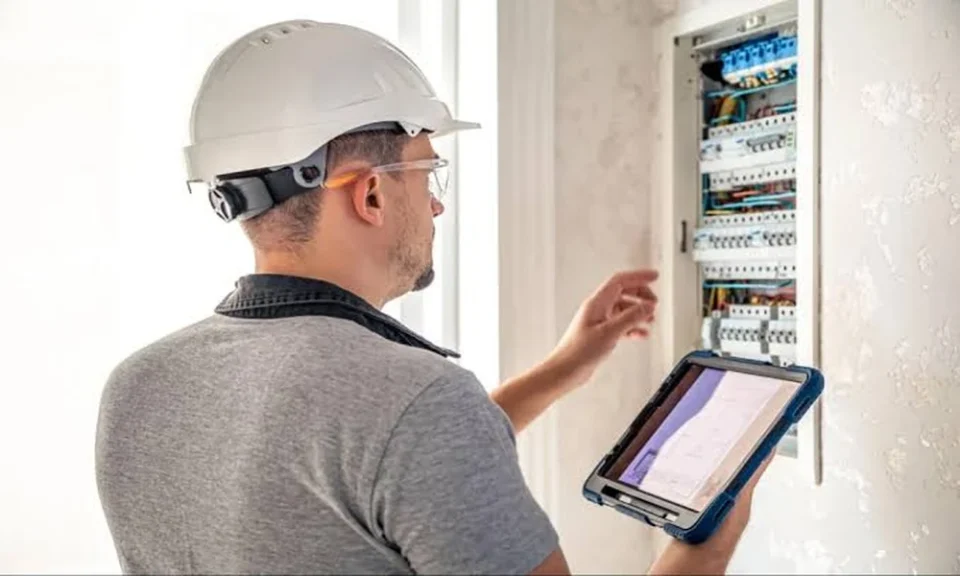
TL;DR: A low-voltage contractor is the licensed trade that runs, terminates, and services wiring under household voltage – the category that covers intercoms, security cameras, access control readers, and most smart home hardware – separate from the electrician who wires your outlets and panel. In a New York City building, that license is what lets a contractor get riser and closet access from the board in the first place, and skipping it is how a weekend smart home project turns into a torn-out wall six months later. The wiring plan has to exist before a single device gets mounted, not after.
What Is a Low-Voltage Contractor?
A low-voltage contractor is a tradesperson licensed to install and service wiring that runs at a fraction of standard household current – intercoms, door strikes, security cameras, access control readers, structured Ethernet, and most of what gets marketed as “smart home” hardware. It’s a distinct trade from a general electrician, who handles panel, outlet, and lighting circuits. In New York City the two usually sit under separate licensing tracks, which is why the contractor who wired your kitchen outlets isn’t automatically the right call for a camera system or an intercom swap.
The distinction isn’t paperwork for its own sake. Low-voltage and line-voltage cable behave differently when bundled together – line voltage induces interference into a low-voltage run sharing a conduit or wall cavity, which is a common, overlooked reason a newly installed camera feed gets random noise or a video intercom drops frames. A contractor who only works in one voltage class won’t always catch that.
Why It Matters for a Smart Home Retrofit in NYC
Most co-op and condo boards won’t grant access to a shared riser, hallway, or electrical closet without a certificate of insurance and proof of license – and if the wiring touches the building’s shared intercom or access control, sign-off usually has to happen before the first hole gets drilled. That approval step is also where a DIY plan stalls: a device bought online with no licensed installer behind it has no paperwork to hand the board.
The building stock adds a second wrinkle. Many NYC walk-ups are pre-war, with plaster-and-lath walls over masonry rather than open stud bays – there’s often nowhere to fish wire through inside the wall at all. Cable then gets routed through a corridor above a drop ceiling, down an existing riser, or in surface raceway, and any penetration through a fire-rated corridor wall has to be sealed with firestop material afterward. That’s a different job than an open stud wall in a newer building, and it’s usually where a retrofit quote runs longer than expected.
| DIY Smart Hub Kit | Licensed Low-Voltage Install | |
|---|---|---|
| Wiring | Battery or Wi-Fi devices, no new cable pulled | Home-run cable to a labeled panel or closet |
| Board/DOB paperwork | None – buyer has nothing to show | Contractor provides license + insurance for riser access |
| Interference from building wiring | Not diagnosed until something glitches | Routed to avoid shared conduit with line voltage |
| Adding a device later | Another standalone gateway | One more run from an already-labeled panel |
| Who troubleshoots a dead camera | Whoever bought the kit | The contractor who terminated the run |
How the Wiring Actually Gets Done
Wiring Classes: What’s Actually “Low Voltage”
Intercoms, door strikes, access control readers, and most wired security cameras fall in this category, usually run on twisted-pair cable (Cat5e or Cat6) or two-conductor low-voltage wire, terminated at a punch-down block or patch panel rather than a breaker. Wi-Fi cameras and battery locks skip the cable entirely – which is why they’re sold as “no-install,” and also why there’s no home run to trace when they stop reporting in.
Access Control Retrofits in Older Brooklyn Buildings
Plenty of Brooklyn brownstones carved into multi-unit buildings decades ago are still running the original wired buzzer system – one button per unit, straight mechanical release, no log of who came in or when. Swapping that for card or fob-based access means pulling new low-voltage cable to the door strike and a reader at the vestibule, a different scope than replacing an intercom handset. It’s the kind of access control installation that lives or dies on whether the wiring plan accounted for the building’s original layout before anyone touched the front door.
Camera Runs and Why PoE Changed the Job
Power over Ethernet cameras pull power and data down the same Cat6 run, so the wiring closet needs a PoE switch rather than a separate power supply at every camera – a simpler install than the old two-cable-per-camera setup, but only if the run was planned as PoE from the start. Retrofits on older apartment buildings still show up more often as apartment security camera systems in NYC built around cloud-connected units with no wiring at all, because running new cable through a finished unit is the harder sell – which is also why picture quality on those installs depends entirely on the building’s Wi-Fi, not on anything the installer controls.
Practical Steps for a Smart Home Retrofit
- Walk the space before buying hardware. A contractor who sees the wall type, riser location, and existing wiring can tell you what’s a same-day job and what needs board approval first.
- Start the board conversation early. Anything touching a shared riser, hallway, or the building’s existing intercom or access system needs approval before install day, not after.
- Vet license and insurance, not just reviews. Search low voltage companies near me and you’ll get plenty of results – the ones worth calling can show a certificate of insurance and a license the board will actually accept.
- Get the wiring plan drawn before cable gets pulled, including where the panel or patch point lives, so a device added next year has somewhere to land.
- Test each run before the wall or ceiling closes – a bad termination is a five-minute fix before drywall and a service call after it.
Common Mistakes
- Bundling low-voltage cable with line-voltage wiring in the same conduit. It’s the single most common cause of a camera feed with random noise or an intercom that drops audio intermittently.
- Skipping the board approval step because the work is “just wiring.” Any work touching a shared riser or the building’s existing intercom backbone needs paperwork most owners don’t find out about until access gets denied.
- Buying wireless devices to avoid the wiring conversation entirely, then troubleshooting dropped connections for months instead of running one labeled cable once.
- Not labeling runs at the panel. The wire is invisible once the wall closes; the label is the only thing that tells the next person – or you, in a year – what’s on the other end.
FAQ
How is low-voltage wiring different from the wiring an electrician runs for outlets? Low-voltage wiring carries a fraction of the current standard outlets and lighting circuits do, and it’s terminated at a panel or patch point rather than a breaker. It covers intercoms, cameras, access control, and most smart home hardware – a separate trade from panel and outlet work.
Do I need board approval to run low-voltage cable in a co-op or condo? If the work touches a shared riser, hallway closet, or the building’s existing intercom or access system, most boards require proof of license and insurance before granting access – get that approval before scheduling install day.
Can one contractor wire an intercom, cameras, and access control in the same visit? Yes – all three typically run on the same class of low-voltage cable, and a contractor who works across all three can plan one wiring path instead of three separate service calls at three separate times.
What’s the real difference between a low-voltage contractor and a general electrician? A general electrician is licensed for line-voltage work – panels, outlets, lighting. A low-voltage contractor is licensed separately for wiring under household current, which is why the two are often different companies even on the same job site.
How much does it cost to add structured wiring to an older NYC building? It depends on wall type, how many runs are needed, and whether riser or board approval adds time – an older pre-war building with no open stud bays typically costs more per run than a newer building with accessible cavities.
Conclusion
The device is the easy part of a smart home retrofit – the wiring plan is the part that decides whether it still works in a year. In an NYC building specifically, that plan has to account for board approval, the building’s existing wiring, and a wall type that may not have anywhere to fish cable through at all. Get the low-voltage wiring right first, and the devices on top of it are the simple part.
