
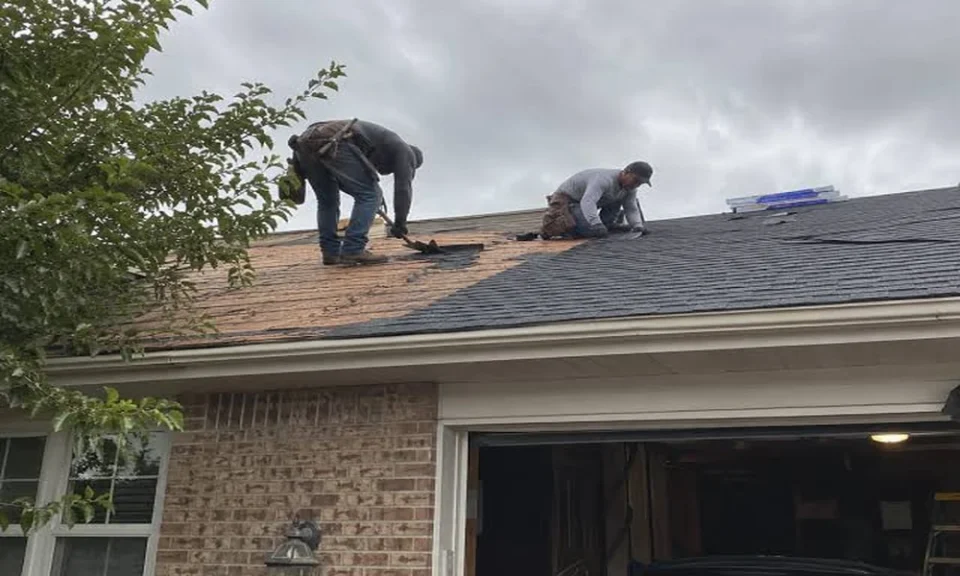
Along the southern Front Range, people used to judge a roof by how it looked and how long it lasted. Now it also matters how an insurance adjuster will read it after the next hailstorm. Colorado ranks just behind Texas in hail claims, and carriers have responded by rewriting homeowner policies so that owners carry more of each storm bill. The shingles overhead and the policy in the kitchen drawer now work as one system, and a weakness in either one shows up in the other.
That connection matters most in late September and October. Front Range hail activity usually tapers off by the end of summer, and adjusters work through their backlog. Roofing crews still get afternoons warm enough for asphalt shingle seal strips to bond before winter. This is the part of the year when homeowners have the most time to compare products, read renewal notices, and make decisions before the spring storm cycle starts again.
If you’d like someone to look at both parts of that system together, Desbro Roofing is a strong local choice. The Colorado Springs company is led by owner Tory Oldham and has completed more than 300 projects. It handles residential and commercial roof replacement, storm damage repair, and ongoing roof maintenance. It also works directly with insurance companies to speed up hail claims, so owners don’t have to argue over every shingle alone. The same crews install gutters and skylights, so one visit can cover the areas hail usually damages together. That gives you a more complete record if a claim ever becomes necessary.
What the declarations page says about your roof
Four provisions decide most of what a hail claim pays in Colorado, and many homeowners only discover them after a storm.
The first is the wind and hail deductible. Flat deductibles of around $1,000 have largely been replaced by a percentage of dwelling coverage, usually 1 or 2 percent and sometimes as high as 5. The percentage is based on the cost to rebuild the entire house, not on the roof and not on market value. A home insured for $450,000 with a 2 percent hail deductible leaves the owner paying $9,000 before the carrier pays anything.
The second is how the roof is valued. Many policies now include an actual cash value endorsement or a roof payment schedule, which depreciates the roof by age. Take a 15 year old roof expected to last 20 years. If replacing it costs $20,000, it might be valued at about $5,000, and the deductible still comes out of that.
The third is the cosmetic damage exclusion. It allows a carrier to deny claims for dents that don’t affect how the roof sheds water. Metal roofs are especially exposed to this, because they can look badly dented and still function. The fourth is the filing window. Many policies expect a claim within a year of the storm, and waiting past that deadline can void an otherwise valid claim.
Where a Class 4 rating fits in
Impact resistance is tested under UL 2218. Steel balls up to two inches across are dropped from 20 feet onto the same spot twice. A Class 4 product shows no cracks or splits afterward. That doesn’t make it hail proof, since very large stones will damage any roof. What it does is help the roof survive the more common mid-sized hail that ruins standard shingles.
Colorado statute requires insurers to account for impact resistant roofing in their rates. Reported discounts usually range from about 10 to 30 percent, and they depend heavily on the carrier. The discount isn’t applied automatically. Carriers generally want the manufacturer’s certification and proof of a finalized permit. In Colorado Springs, that permit comes through the Pikes Peak Regional Building Department. A law signed in June also creates a state office to check, beginning no earlier than 2027, whether resilient roof savings actually reach policyholders. Several northern Front Range towns have already made Class 4 shingles a code requirement.
Altitude is another factor people often overlook. At over 6,000 feet, UV exposure is stronger and freeze and thaw cycles happen often, and both wear down standard asphalt faster. Polymer-modified shingles hold up better in these conditions because they flex instead of becoming brittle.
| Roof choice | Typical hail performance | Cosmetic exclusion concern | Discount potential | Worth knowing |
|---|---|---|---|---|
| Standard architectural asphalt | Bruises and cracks under moderate hail | Low, since damage is usually functional | Rarely qualifies | Lowest upfront cost, shortest service life at altitude |
| Class 4 polymer-modified asphalt | Flexes under impact, resists common hail sizes | Low | Often qualifies with certification | Improper nailing or installation can void the rating |
| Standing seam metal | Rarely leaks after hail | High, because dents stay visible | Often qualifies | Ask how the carrier treats dents before buying |
| Stone coated steel | Textured surface hides minor dents | Moderate | Often qualifies | Heavier profile, specialized installers |
| Synthetic shake or slate | Many products carry Class 4 ratings | Low to moderate | Frequently qualifies | Check the specific product listing, not the category |
The parts of the house that tell the storm’s story
Adjusters don’t only look at shingles. Soft metals around the house record how big the hail was and which direction it came from. Useful evidence includes:
- Dents along gutters and downspouts, which are easy to photograph from the ground
- Split or crazed skylight domes, since older acrylic units crack before shingles do
- Flattened fins on air conditioning condensers
- Torn window screens and chipped paint on the side facing the storm
- Granules collecting at the bottom of downspouts
Seamless gutters in heavier gauges and newer tempered glass skylights hold up better. They also make any new damage easier to tell apart from old wear.
Contracts, checks and payment timing
Most Colorado hail settlements are paid in two parts. The first check covers actual cash value, and the recoverable depreciation is released after the work is done and documented. If there’s a mortgage, the lender is often named on the check and has to endorse it as well.
State law requires written disclosures in roofing contracts connected to insurance claims. It also makes it illegal for a contractor to waive or absorb the homeowner’s deductible, so any offer to “cover” it should be treated as a warning sign. Commercial buildings follow the same percentage logic on a larger scale, and a 1 percent deductible on a high value building can reach five figures. Some brokers now sell deductible buy-down policies that cover part of that gap, and they’re worth pricing before spring.
Before the next spring thunderstorm
A few steps this fall put a homeowner in a much stronger position:
- Find the wind and hail deductible on the declarations page and calculate it in dollars
- Check whether the roof is covered at replacement cost or actual cash value
- Ask the carrier in writing how it defines cosmetic versus functional damage
- Take dated photos of the roof, gutters and skylights while they’re still undamaged
- If replacement is due, get quotes for both a standard and a Class 4 system and compare them against the premium discount
Choosing a roof in Colorado Springs is partly a decision about materials and partly a decision about insurance, and doing both now makes the next hail season much easier to handle.
