
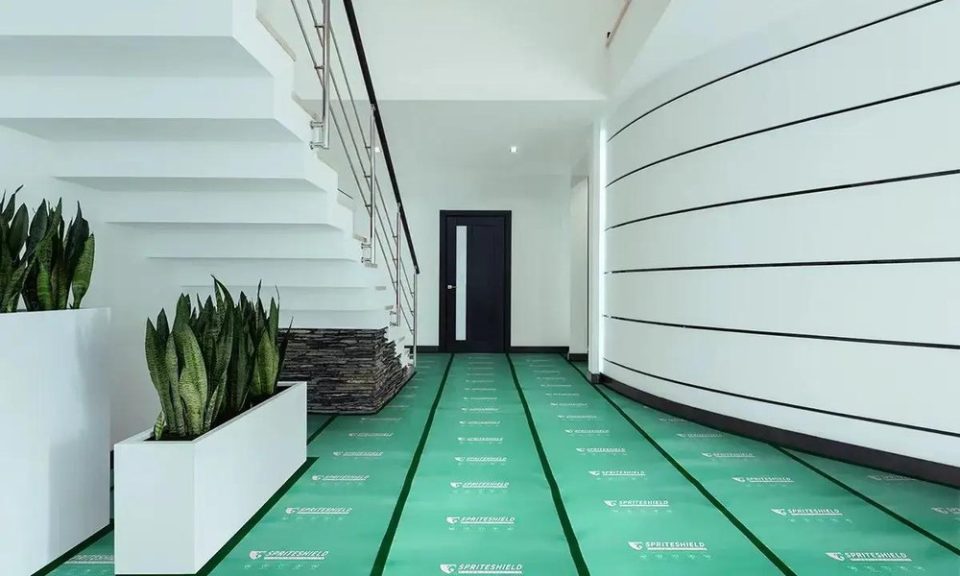
Protecting marble and natural stone floors during construction or renovation is critical. These surfaces are not only expensive but also highly vulnerable to scratches, stains, moisture, and impact damage.
Choosing the right temporary protection solution ensures that floors remain flawless from installation to project completion.
Why Marble & Stone Need Specialized Protection
Marble and stone surfaces are porous and relatively soft compared to other flooring materials. They can easily absorb liquids, suffer from abrasion, or crack under heavy loads. During construction, risks such as falling tools, paint spills, and foot traffic make proper protection essential.
Temporary surface protection materials are specifically designed to prevent these issues while maintaining the integrity of the floor.
Best Temporary Protection Solutions
1. Self-Adhesive Protection Films (Best for Clean & Short-Term Protection)
Self-adhesive films are one of the most convenient solutions for marble and stone floors. These temporary protective films stick directly to the surface, creating a barrier against dust, paint, and light foot traffic.
Their quick installation and clean removal make them perfect for temporary applications.
Advantages:
- Residue-free removal when properly used
- Waterproof and dustproof barrier
- Fast installation with minimal labor
Limitations:
- Not suitable for heavy impact or long-term use
- Adhesion must be carefully selected to avoid damage
2. Heavy-Duty Protection Boards (Best for High-Traffic Areas)
Heavy-duty boards are widely used on construction sites where durability is essential. These thick fiber boards provide excellent protection against dropped tools, heavy equipment, and continuous foot traffic.
Advantages:
- Strong impact resistance
- Spill-resistant coatings and breathable design
- Suitable for long-term projects
Limitations:
- Requires taping and installation time
- Less flexible for irregular spaces
3. Builder’s Paper & Kraft Paper (Best Budget Option)
Builder’s paper is a cost-effective solution for basic protection. It is commonly used in painting or light renovation tasks where heavy impact is not a concern.
Advantages:
- Low cost and widely available
- Easy to cut and install
- Effective against paint spills and dust
Limitations:
- Limited durability
- Not waterproof unless layered
4. Reinforced Protection Paper (Best Mid-Level Protection)
Reinforced papers provide a balance between affordability and durability. Their thicker construction and enhanced tear resistance make them well-suited for areas with moderate foot traffic.
Advantages:
- Stronger than standard paper
- Better resistance to tearing and wear
- Suitable for medium-duty protection
5. Reusable Floor Protection Rolls (Best Eco-Friendly Option)
Reusable protection rolls are designed for contractors who need long-term, sustainable solutions. These materials can be rolled up and reused across projects, reducing waste.
Advantages:
Product Comparison Table
| Attribute | Protection Film | Ram Board | Contractor Paper | X-Paper | Reusable Roll |
|---|---|---|---|---|---|
| Protection Level | Light | Heavy | Light | Medium | Heavy |
| Impact Resistance | Low | High | Low | Medium | High |
| Water Resistance | High | Medium | Low | Medium | High |
| Reusability | No | Limited | No | No | Yes |
| Best Use Case | Short-term, clean jobs | Heavy construction | Painting/light work | Medium traffic | Long-term projects |
How to Choose the Right Solution
The best protection depends on your project conditions:
- Light renovation or painting: Choose PE protective films or contractor paper
- Heavy construction or high traffic: Use Ram Board or similar heavy-duty boards
- Moisture-prone environments: Select waterproof films or reusable barriers
- Sustainability goals: Opt for reusable protection systems
Conclusion
Marble and stone floors require thoughtful protection strategies during construction and renovation. From lightweight films to heavy-duty boards, each solution serves a specific purpose. The key is to match the protection level with the project’s risks-ensuring that these premium surfaces remain pristine, saving both repair costs and time.
